
Blog

How to Choose Prefabricated Labour Hutments?

How to Choose Prefabricated Labour Hutments?

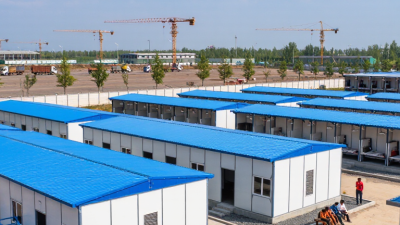
Choosing Prefabricated Labour Hutments requires more than comparing prices and floor plans. These units become bedrooms, dining areas, offices, and recovery spaces for workers. Their design affects comfort, safety, productivity, and long-term project costs. A practical decision starts with the site. Consider climate, ground conditions, transport access, workforce size, and expected occupancy duration. Look closely at materials and construction details. Insulated wall panels can reduce heat gain during hot afternoons and retain warmth at night. Proper ventilation helps control condensation, odours, and indoor air quality. Fire-resistant materials, safe electrical systems, clear exits, and stable foundations deserve careful attention. They are not optional details. Ask suppliers for technical specifications, quality records, installation guidance, and maintenance procedures. Independent inspections can also verify whether the delivered units match the approved design. A cheap unit may look attractive. It may not remain cheap. Frequent repairs, poor insulation, difficult relocation, and uncomfortable interiors can increase operational costs. Even experienced buyers sometimes focus too heavily on the initial quotation. That is a useful mistake to examine. Compare the full lifecycle value, including delivery, assembly, servicing, energy use, and eventual removal. Review the supplier’s previous projects and speak with clients who have used similar units in comparable conditions. Reliable choices come from measurable evidence, not confident promises. The best Prefabricated Labour Hutments balance worker welfare, regulatory expectations, durability, and practical site requirements without adding unnecessary complexity.
Read more »
Evelyn By:Evelyn - October 22, 2026
What Is a Prefabricated Worker Dormitory?

What Is a Prefabricated Worker Dormitory?

A Prefabricated Worker Dormitory is more than a building assembled away from its final site. It is a coordinated housing system, designed for rapid installation, controlled costs, and dependable daily living. Factory-made rooms can arrive with wiring, plumbing, insulation, beds, lockers, and bathroom units already prepared. On site, cranes position the modules beside prepared foundations. The process can reduce disruption and shorten construction schedules. The need is substantial. The World Bank estimates that 1.6 billion people lack adequate housing worldwide. Meanwhile, McKinsey’s report, Modular construction: From projects to products, suggests modular methods may reduce construction timelines by 20% to 50%. Its findings also indicate potential cost reductions of up to 20%, although results depend on design, transport, labor, and local conditions. These figures are useful, but they are not guarantees. Architect and modular-housing expert Adam Kalkin once said, “I think that the future of architecture is modular.” His observation supports a practical question: can modular buildings provide workers with dignity, safety, and comfort? A credible dormitory must answer that question through ventilation, daylight, acoustic control, fire protection, sanitation, and accessible maintenance. A narrow room with a metal bed is not enough. The details matter. A well-planned facility includes shaded outdoor areas, secure storage, clean shared kitchens, and clear emergency routes. Prefabrication can improve consistency, yet poor planning can repeat the same mistake across every module. That weakness deserves attention. The strongest projects combine factory precision with local expertise, worker feedback, and independent inspections. Therefore, understanding a Prefabricated Worker Dormitory requires examining both its construction technology and its human responsibilities.
Read more »
Amelia By:Amelia - October 17, 2026
China Top 10 Prefabricated Medical Clinics Manufacturers

China Top 10 Prefabricated Medical Clinics Manufacturers

China Top 10 Prefabricated Medical Clinics Manufacturers China’s healthcare network is vast and unevenly distributed. The National Health Commission reported more than 1.07 million medical and health institutions in 2023, including about 38,000 hospitals. Many communities still need clinics that can be delivered quickly, installed safely, and adapted to limited sites. This demand gives Prefabricated Medical Clinics a practical role in primary care, emergency response, vaccination, and rural health services. McKinsey’s report, Modular construction: From projects to products, indicates that modular methods can reduce construction schedules by roughly 20% to 50% under suitable conditions. The report also stresses design standardization, factory quality control, and early coordination. These conditions matter. A clinic is not merely a steel box with bright walls. It needs cleanable surfaces, reliable ventilation, medical-gas planning, infection-control zones, and accessible patient circulation. Tom Hardiman Jr., executive director of the Modular Building Institute, describes the principle clearly: “Modular construction is a process, not a building type.” That distinction helps readers judge manufacturers more professionally. The best supplier may not be the largest factory. It may be the company that documents testing, manages transportation, and supports commissioning after installation. This ranking examines China’s leading manufacturers through those practical signals. It considers production capability, healthcare experience, customization, certifications, delivery performance, and after-sales service. Reported market figures can differ between research firms. Product claims also require verification. Therefore, this list should guide supplier evaluation, not replace technical due diligence. Some manufacturers may appear strong on paper yet provide limited evidence. That gap deserves attention.
Read more »
Amelia By:Amelia - October 12, 2026
2026 Best Modular Emergency Hospitals for Global Buyers

2026 Best Modular Emergency Hospitals for Global Buyers

Global emergencies are becoming more complex, mobile, and difficult to predict. The World Health Organization’s 2024 Health Emergency Appeal estimated that 305 million people would need humanitarian assistance worldwide. This pressure exposes the limits of permanent hospital construction, especially where land, utilities, and skilled labor are constrained. Modular Emergency Hospitals offer a practical response. Factory-built clinical rooms can be transported, assembled, expanded, or relocated with less site disruption. Yet speed alone is not enough. Buyers must examine ventilation, oxygen systems, infection-control zoning, fire protection, medical gases, power redundancy, and local clinical workflows. Small details matter. A badly positioned handwashing station can slow an entire treatment area. The WHO Operational Planning Guidelines for COVID-19 emphasized rapid capacity expansion, triage, isolation, and essential service continuity. These principles remain relevant for future outbreaks, disasters, and conflict-affected civilian settings. The International Organization for Standardization also highlights risk-based quality management through standards such as ISO 9001 and ISO 13485, although certification does not automatically prove hospital performance. Recent disaster assessments from UNDRR and EM-DAT show why resilient healthcare infrastructure deserves closer attention. Extreme weather can damage roads, utilities, and supply chains before patients arrive. A modular facility must therefore perform beyond the factory gate. Testing in realistic heat, rain, dust, and power-loss conditions is essential. This 2026 guide evaluates leading suppliers for global buyers. It considers engineering evidence, deployment experience, after-sales support, customization, and total lifecycle cost. Market claims can be incomplete. Some published comparisons lack transparent testing data. Careful verification remains necessary.
Read more »
Alexander By:Alexander - October 7, 2026
How to Buy Two Storey Prefabricated Houses in 2026?

How to Buy Two Storey Prefabricated Houses in 2026?

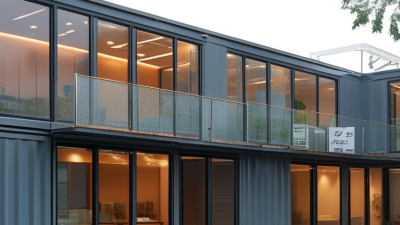
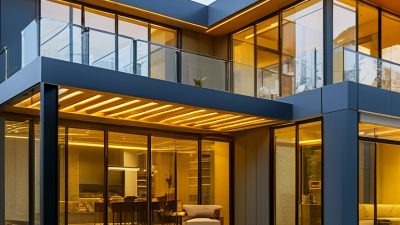
Buying Two Storey Prefabricated Houses in 2026 requires more than comparing showroom prices. The real decision begins with land, planning rules, transport access, and future maintenance. A house may look affordable online, yet site preparation can change the final budget quickly. Concrete foundations, crane access, drainage, insulation, and utility connections all deserve early estimates. McKinsey & Company’s 2019 report, Modular construction: From projects to products, estimated that modular construction could create more than $130 billion in annual real-estate value across Europe and the United States. The report also identified potential cost savings of up to 20 percent and shorter project schedules of up to 50 percent. These figures are encouraging, but they are not guarantees. Local labor costs, factory capacity, design changes, and shipping distances can reduce those advantages. Ryan E. Smith, an offsite-construction specialist and author of Offsite Architecture, expressed the central idea clearly: “The building is a product, not a project.” That mindset changes how buyers should compare Two Storey Prefabricated Houses. Ask for the complete specification, not attractive room images. Check the structural system, fire performance, weather resistance, energy rating, warranty terms, and installation responsibilities. Request recent completed projects and speak with previous owners. Small details matter. Look beneath the brochure. A reliable supplier should explain what happens when delays occur. It should also identify excluded costs in writing. This is where many buyers become overconfident. The cheapest quotation may be incomplete, while the most expensive option may offer unnecessary upgrades. A careful 2026 purchase balances factory quality with local compliance, realistic budgeting, and long-term usability.
Read more »
Amelia By:Amelia - October 2, 2026
China Top Single Storey Prefabricated Houses Manufacturers

China Top Single Storey Prefabricated Houses Manufacturers

China’s Single Storey Prefabricated Houses market brings together factory production, transport planning, and on-site assembly. Buyers comparing manufacturers should look beyond polished renderings. The real test is whether drawings, material specifications, and factory checks match the finished house. Small details matter. A window seal, roof joint, or floor connection can affect comfort after the first heavy rain. Dr. Ryan E. Smith, an architecture professor and off-site construction researcher at the University of Utah, has studied how design and production work together. A concise paraphrase of his published thinking is: “Coordinate design, factory production, and site assembly from the start.” This is a paraphrase, not a verbatim quotation. It points to a practical issue: prefabrication cannot fix unclear plans or weak quality control by itself. Buyers should ask how manufacturers document inspections, protect components during transport, and resolve defects. This guide introduces China-based manufacturers and the questions worth asking before making a shortlist. Compare structural systems, insulation details, finish options, production capacity, and delivery arrangements. Ask for project examples with comparable layouts and climates. Check what the quoted scope includes, from foundations to utility connections. A factory visit can help, but it is not a guarantee. Paperwork and photographs have limits. That deserves reflection. A low price may leave important work outside the contract, while a detailed specification makes comparisons more meaningful. The aim is not to find one universal winner, but to identify a supplier whose process fits the project and can be verified.
Read more »
Amelia By:Amelia - September 27, 2026
2026 Best Lightweight Steel Buildings for Global Buyers?

2026 Best Lightweight Steel Buildings for Global Buyers?

Choosing the right Lightweight Steel Buildings in 2026 requires more than comparing prices and attractive product images. Global buyers need structures that balance strength, weight, durability, energy performance, and shipping practicality. A warehouse near a humid coastline faces different demands from a farm building in a cold inland region. Local wind, snow, seismic activity, soil conditions, and building approvals can change the entire specification. This guide examines practical options for international buyers, including prefabricated warehouses, modular workshops, agricultural buildings, garages, and compact commercial spaces. It considers steel grades, protective coatings, connection systems, insulation, ventilation, fire safety, and expected maintenance. Clear technical drawings matter. So do accurate load calculations and transparent supplier documentation. Experienced manufacturers should explain tolerances, delivery terms, installation steps, and after-sales support without hiding important limitations. No option fits every market. That is the honest part. A low-cost building may require stronger insulation, better corrosion protection, or more expensive foundations. Some suppliers also present impressive factory photographs without proving production quality. Buyers should request material certificates, reference projects, engineering reviews, and realistic project schedules. Independent local professionals remain valuable, especially when regulations or site conditions are unfamiliar. This overview is designed to support careful comparison, not replace professional advice. Small details matter. A poorly sealed joint can admit rain, while an overlooked transport dimension can delay installation for weeks. With verified information and realistic expectations, buyers can identify safer, more efficient Lightweight Steel Buildings for projects across different climates and regions.
Read more »
Alexander By:Alexander - September 22, 2026
How to Choose Prefabricated Panels for Global Projects?

How to Choose Prefabricated Panels for Global Projects?

Choosing Prefabricated Panels for global projects is not simply a matter of comparing prices per square metre. It requires evidence, local knowledge, and disciplined risk assessment. McKinsey’s 2019 report, Modular Construction: From Projects to Products, estimated that modular methods could create more than $100 billion in annual real-estate value across Europe and the United States. It also identified potential annual savings of $20–30 billion. Those figures are persuasive, but they do not guarantee success. Ryan E. Smith, an offsite-construction researcher and author of Offsite Architecture, offers a useful warning: “Offsite construction is a process, not a product.” That principle matters when panels cross borders. A panel designed for a dry climate may fail in coastal humidity. A fire rating accepted in one country may not satisfy another jurisdiction. Small differences in tolerances can become expensive problems at the installation site. Good selection begins with the project’s actual conditions. Check thermal performance, moisture resistance, fire classification, acoustic values, structural capacity, and declared environmental data. Review factory quality controls, testing records, packaging methods, and replacement procedures. The World Green Building Council has repeatedly highlighted the need to reduce embodied carbon across building materials. Therefore, transport distance and panel weight deserve equal attention. There is no perfect panel. A lower-carbon product may require longer shipping. A cheaper system may need skilled installers unavailable locally. These uncomfortable trade-offs should be documented, not hidden. This guide explains how to compare Prefabricated Panels using technical evidence, regional standards, logistics data, supplier experience, and realistic site conditions.
Read more »
Evelyn By:Evelyn - September 15, 2026
China Top Modular Container Buildings Manufacturers?

China Top Modular Container Buildings Manufacturers?

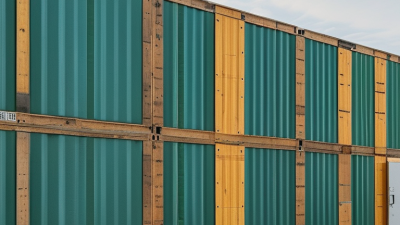
China has become a major manufacturing base for Modular Container Buildings, serving construction, education, healthcare, accommodation, and emergency housing projects. Its strongest manufacturers combine factory production with practical site experience. They design steel frames, insulated panels, electrical systems, plumbing, and interior finishes as one coordinated package. The best suppliers are not always the largest. A reliable manufacturer should show completed projects, verified material specifications, quality-control records, and clear installation procedures. Factory photographs help, but they do not prove long-term performance. Ask about welding standards, corrosion protection, fire resistance, thermal insulation, wind loads, and replacement parts. Small details matter. A poorly sealed corner can cause water damage within one rainy season. Dr. Ryan E. Smith, a recognized modular construction researcher, has stated, “Modular construction is not a product, but a process.” This idea is useful when comparing China’s top manufacturers. The process includes engineering, procurement, factory assembly, transportation, site preparation, and commissioning. A supplier may produce attractive modules yet struggle with delivery coordination or local compliance. That weakness should remain visible. This guide examines leading Chinese manufacturers through a practical and evidence-based lens. It considers production capacity, customization, certifications, project experience, communication, and after-sales support. No ranking is perfect. Supplier information can change quickly. Buyers should still request current documents and inspect samples before signing contracts. The goal is not to praise every factory. It is to identify manufacturers that can turn standardized modules into safe, durable, and usable buildings.
Read more »
Evelyn By:Evelyn - September 15, 2026
China Best Custom Prefab Homes Manufacturers?

China Best Custom Prefab Homes Manufacturers?

Choosing the best Custom Prefab Homes manufacturer in China requires more than comparing factory prices. A reliable supplier should demonstrate practical experience, technical competence, and consistent project delivery. Buyers need to examine completed homes, production facilities, material samples, and detailed engineering documents before making a decision. The right manufacturer can explain how steel frames, insulation layers, windows, electrical systems, and plumbing components perform in different climates. They should also provide clear drawings, realistic schedules, quality inspection records, and installation guidance. Factory audits can reveal important details, such as welding accuracy, moisture protection, storage conditions, and worker training. Small details matter. International buyers should confirm whether the home design meets local building requirements. Structural calculations, fire performance, energy efficiency, transportation limits, and foundation conditions must be reviewed by qualified professionals. A manufacturer may offer attractive designs, but local approval can still become difficult without proper documentation. This is often overlooked. Communication also affects the final result. Reliable suppliers answer technical questions directly and explain what they cannot provide. Their contracts should define materials, tolerances, payment stages, warranties, delivery responsibilities, and after-sales support. Some companies appear strong online but provide limited evidence of real projects. That weakness deserves attention. There is no universal “best” manufacturer. The most suitable choice depends on project size, climate, budget, design complexity, and installation location. Even experienced buyers can miss hidden costs, including customs handling, foundation work, and local labor. Careful comparison is essential. This guide examines leading Chinese manufacturers through practical evidence, not marketing claims, helping buyers make a more informed and dependable decision.
Read more »
Evelyn By:Evelyn - September 15, 2026