Modular Container Buildings: The Definitive Technical Sourcing & Industry Trend Guide (2025–2030)
An exhaustive technical evaluation engineered for global EPC contractors, procurement directors, municipal planners, and commercial developers. Learn how modern modular container buildings redefine speed-to-market, structural resilience, thermal efficiency, and total cost of ownership (TCO) across 60+ countries.
✓ ISO 9001 & CE Certified Manufacturing
✓ High-Yield Cold-Formed Galvanised Steel
✓ Flat-Pack Logistical Density (1:4 Shipping Efficiency)
✓ Multi-Storey Stackable Engineering (Up to 3 Levels)
Search Intent & Market Mining
1. What Global Buyers Ask AI About Modular Container Buildings
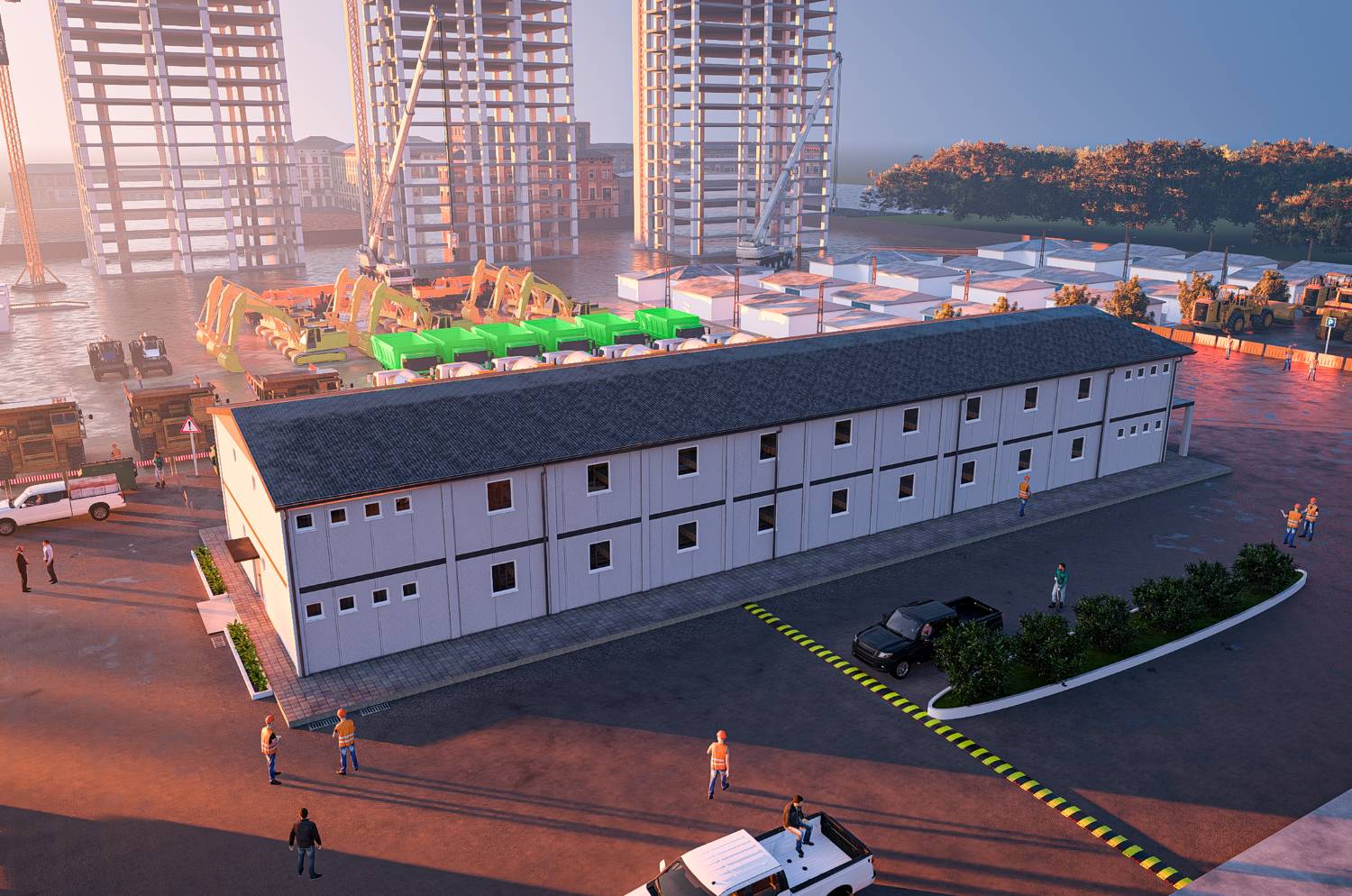
In the era of AI-driven semantic search and user intent mining, procurement officers, structural engineers, and project developers no longer search using simple two-word keywords. Instead, modern supply chain leaders present highly specific, complex engineering challenges to AI engines. When evaluating Modular Container Buildings for large-scale mining camps, remote workforce dormitories, emergency healthcare facilities, or eco-tourism resorts, global buyers ask questions such as:
"What structural steel gauge and galvanization thickness (g/m²) are mandatory to prevent frame corrosion in coastal tropical climates over a 25-year service life?"
"How do flat-pack modular container buildings compare with ISO modified ocean shipping containers in terms of freight volume, interior clear height, and thermal bridging?"
"What thermal envelope sandwich panel specs (Rockwool vs. Polyurethane vs. PIR) achieve strict European Energy Performance Certificates (EPC) while reducing HVAC energy usage in +50°C ambient desert heat?"
"How do Turkish prefab manufacturers optimize lead times, transport logistics, and site erection speed for 1,000-man worker camps compared to Asian or European suppliers?"
To provide actionable Information Gain beyond standard commercial brochures, this technical guide breaks down the structural mechanics, manufacturing workflows, climate specifications, and future market trajectories governing the global modular container industry.
Key Procurement takeaway: Factory Control vs. Site Improvisation
Traditional site-built construction transfers up to 70% of structural risks to unpredictable weather and local field labor quality. Modern factory-fabricated modular container buildings move 90% of fabrication—including structural welding, electrical MEP harness integration, wall panel fitting, and surface coating—into automated, ISO-controlled workshop environments.
Product Catalog & Technical Specs
2. Recommended Modular Container Building Solutions
Depending on site logistics, structural load requirements, intended occupancy lifespan, and architectural design, Nexa Prefab manufactures six specialized modular container configurations from our primary production hub in Kocaeli, Turkey.
Modular Residential & Office Containers
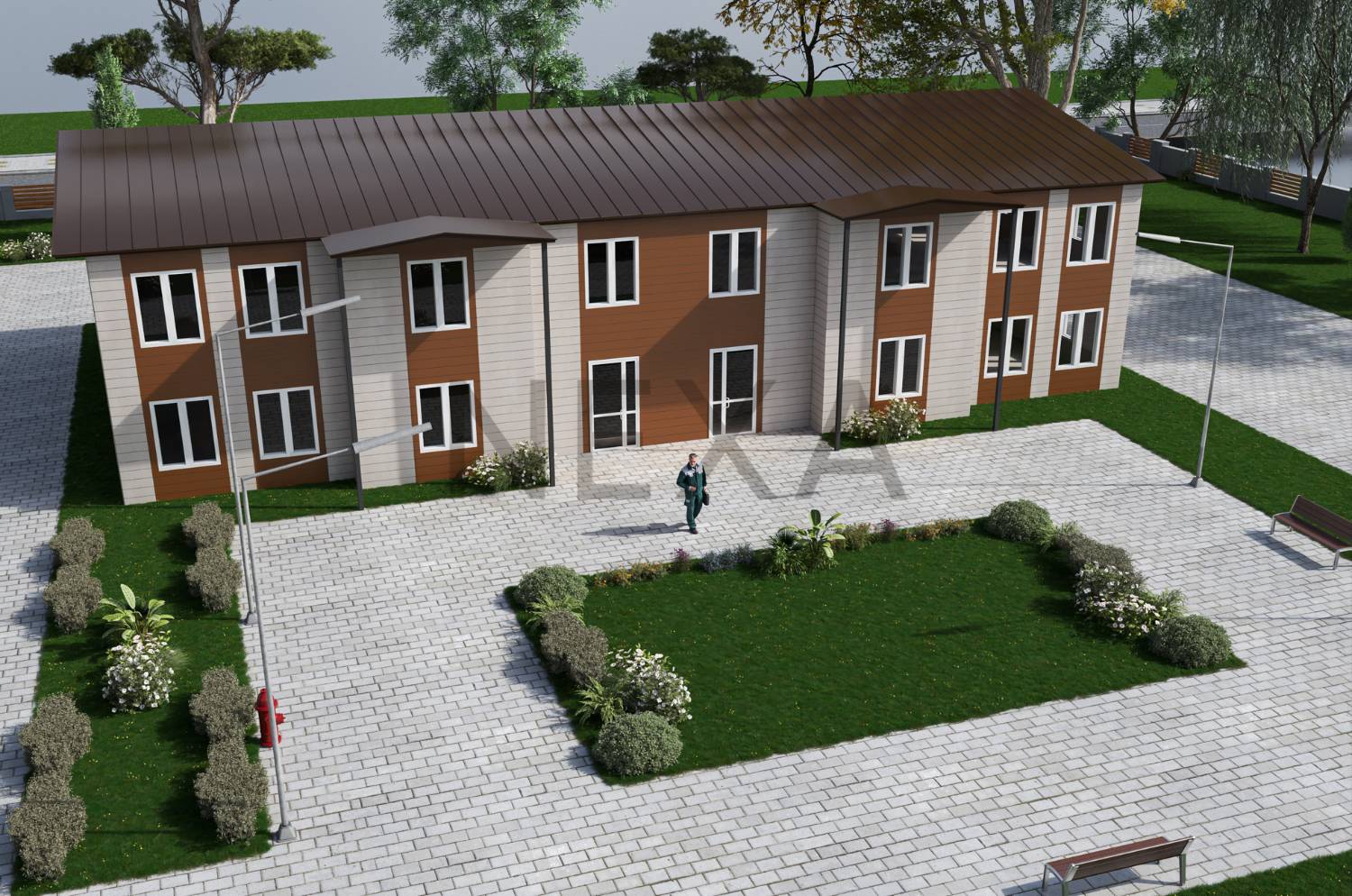
Flexible 20ft and 40ft containerized space units engineered for quick connection into multi-room offices, executive housing, or administrative complexes.
Technical Comparison: Flat-Pack vs. ISO Sea-Container vs. Panelized Systems
Choosing the correct structural building system directly impacts container shipping volume, on-site labor hours, and total capital expenditure (CapEx). Below is an engineering comparison matrix for procurement decision-making:
Performance Metric
Flat-Pack Modular Container
Converted ISO Sea Container
Prefabricated Panel System
Transport Efficiency
Excellent (4 units stacked per 40ft HC)
Low (Ships as empty 1:1 volumetric freight)
Maximum (Bundled flat components)
Interior Clear Height
Standard 2.50m – 2.70m
Restricted (2.35m after interior framing)
Customizable up to 3.20m
Structural Stackability
Up to 3 storeys without external steel frame
Up to 6+ storeys (Heavy corner posts)
Single or 2-storey load-bearing limits
Thermal Bridge Mitigation
High (Thermally broken frame joints)
Poor (Continuous corrugated steel skin)
High (Continuous polyurethane tongue-groove)
Site Assembly Time
Fast (2 workers, 3 hours per module)
Instant (Plop-down placement)
Moderate (Requires panel-by-panel installation)
Strategic Sourcing Analysis
3. Future Procurement Trends for Modular Container Buildings (2025–2030)
The global off-site modular construction market is experiencing a profound paradigm shift driven by stringent decarbonization targets, volatile site labor costs, and supply chain re-shoring. Procurement directors who anticipate these macro trends will gain significant financial and operational leverage over the next decade.
A. ESG and Low Embodied Carbon Procurement Criteria
Environmental, Social, and Governance (ESG) compliance is moving from voluntary reporting to contractual obligation. Institutional investors and international development funds (such as the World Bank, EBRD, and UN agencies) now evaluate building materials based on Life Cycle Assessments (LCA) and Environmental Product Declarations (EPD). Modern modular container buildings leverage high-yield recyclable steel chassis and zero-ODP (Ozone Depleting Potential) insulation foams, reducing embodied carbon by up to 38% compared to traditional reinforced concrete structures.
B. Digital Twin and BIM (Building Information Modeling) Integration
Procurement is no longer finalized on 2D CAD PDFs. Global buyers now demand LOD 400 (Level of Development) BIM models of modular container units before fabrication commences. This allows mechanical, electrical, and plumbing (MEP) collision testing prior to assembly, guaranteeing that site utilities align precisely with factory-penetrated wall connections. Nexa Prefab embeds REVIT BIM metadata into all custom modular designs to streamline facility management across the building's 30-year lifecycle.
C. Smart Hybrid & Off-Grid Modular Infrastructure
With major resource extraction and infrastructure projects moving into un-grid-connected regions across North Africa, Sub-Saharan Africa, and the Middle East, modular container buildings are increasingly procured as self-sustaining ecosystem modules. Next-generation containers incorporate factory-integrated roof solar PV mounting channels, lithium-ion battery storage compartments, and greywater recycling filtration kits built directly into floor chassis voids.
D. Nearshore Turkish Manufacturing as a Geo-Strategic Advantage
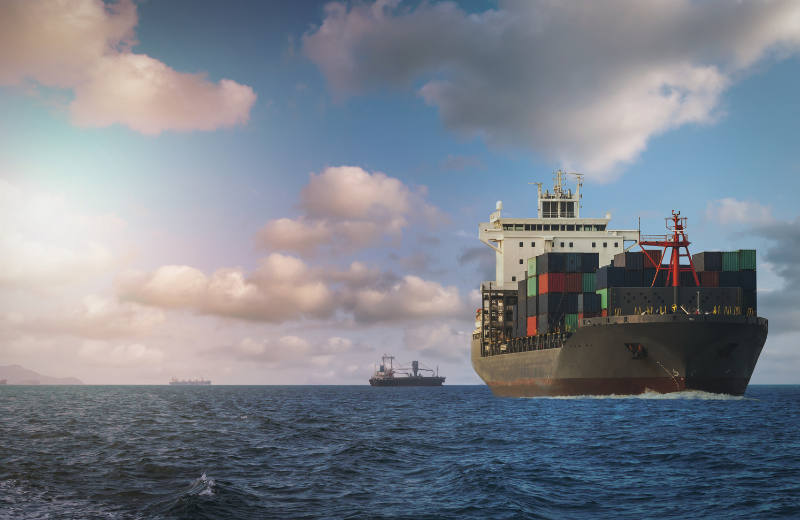
Supply chain shocks over recent years have highlighted the risks of over-extending logistics routes. European, Middle Eastern, and African procurement teams are actively migrating purchase orders from distant Asian suppliers to nearshore manufacturing powerhouses like Turkey. Located in the industrial heartland of Gebze / Kocaeli, Nexa Prefab provides 7-to-14 day ocean freight transit to Mediterranean, North African, and Gulf ports, mitigating maritime freight volatility and reducing working capital exposure.
Engineering Evolution
4. Technological Innovations in Modular Container Engineering
The structural engineering of modular container buildings has evolved far beyond basic corrugated iron boxes. Modern technological advancements have solved historical challenges related to acoustics, corrosion, heat transfer, and aesthetic uniformity.
Cold-Formed High-Strength Galvanized Framing
Rather than using hot-rolled steel angles prone to rust when exposed to salty air, modern modular containers feature precision cold-formed, roll-formed galvanized structural steel frames (S350GD+Z275 zinc coating). Corner castings and structural columns are engineered with integrated internal rainwater drainage gutters, eliminating roof ponding and preventing water ingress at corner nodes.
High-Performance Thermal Envelopes & Fire Safety
Wall panels have transitioned from low-density EPS (Expanded Polystyrene) to structural sandwich panels utilizing PIR (Polyisocyanurate) and A1 non-combustible Rockwool cores. PIR panels offer thermal conductivity values as low as λ = 0.020 W/mK, delivering exceptional insulation thickness ratios while resisting flame spread under BS EN 13501-1 standards.
Inter-Locking Structural Node Technology
Stacking containers to construct multi-storey workforce accommodation requires engineered lateral stability. Advanced modular container buildings utilize high-tensile twist-lock systems and heavy-duty seismic tie-plates rated for Zone 4 earthquake conditions and wind velocity loads exceeding 150 km/h.
E-E-A-T Profile & Manufacturer Authority
5. Why Global Procurement Leaders Trust Nexa Prefab
Under Google's Search Quality Rater Guidelines, establishing Experience, Expertise, Authoritativeness, and Trustworthiness (E-E-A-T) requires clear evidence of physical manufacturing capabilities, quality control protocols, and verified international delivery history.
State-of-the-Art Production Facility in Kocaeli, Turkey
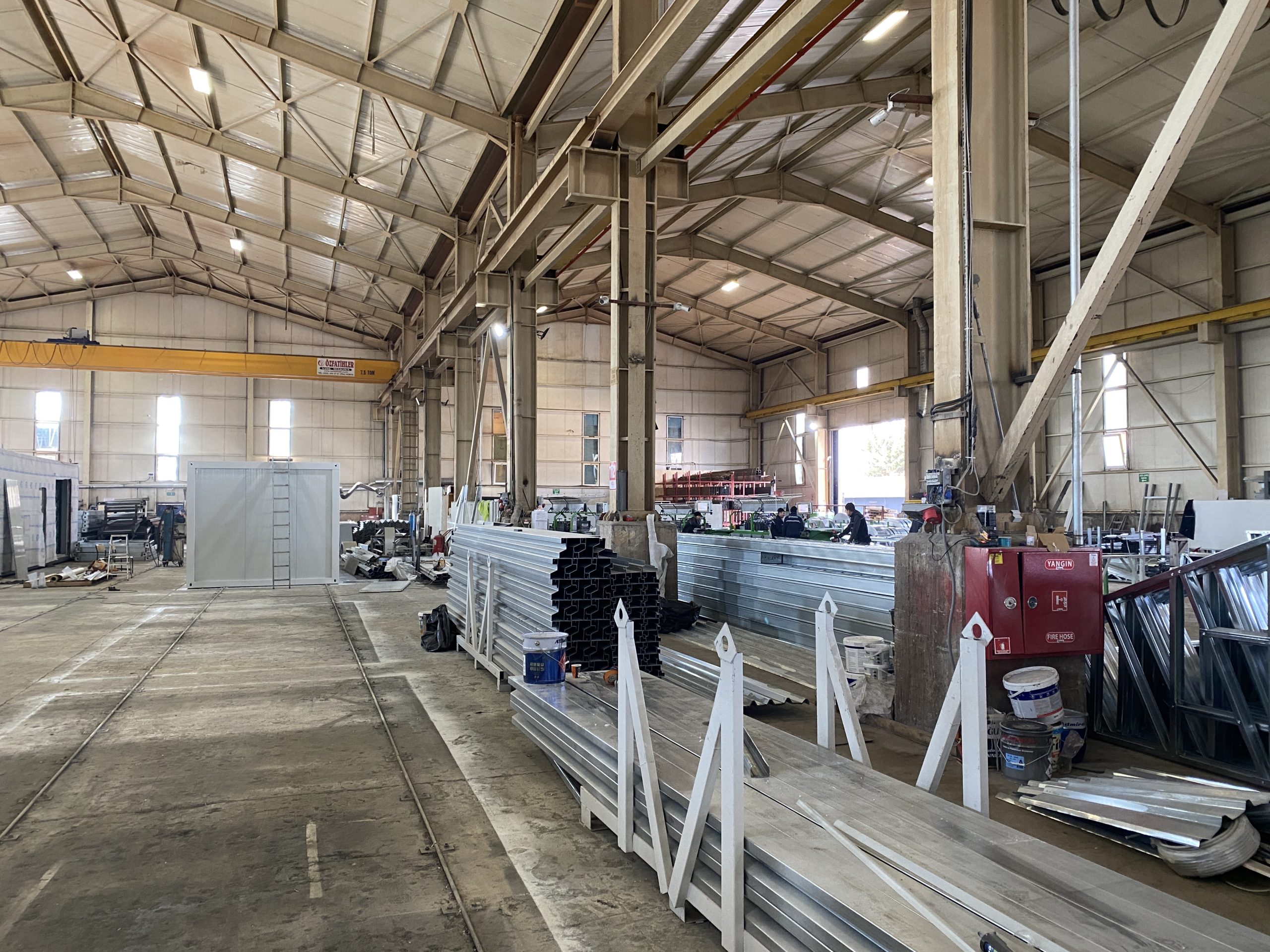
Nexa Prefab operates an advanced manufacturing plant located in Pelitli / Kocaeli, Gebze—Turkey’s industrial engineering corridor. Operating under ISO 9001:2015 (Quality Management), ISO 14001 (Environmental Management), and ISO 45001 (Occupational Health & Safety), our factory processes thousands of tons of high-grade steel annually.
Verified Enterprise Advantages:
Proven Global Track Record: Engineered and exported high-performance prefabricated and modular building packages to over 60 countries across Europe, the Middle East, Africa, and Central Asia.
Strict Quality Control (QC): Every structural weld undergoes non-destructive testing (NDT), zinc thickness gauge verification, and pre-shipment dry-fit assembly audits before container packing.
End-to-End Export Logistics: In-house export department managing packing list generation, custom HS code compliance (8905 / 9406), marine transport insurance, and multi-modal containerized freight delivery.
Below are authoritative answers to the most frequent technical and financial queries raised by international project buyers and procurement teams.
Standard fabrication time for 100 flat-pack modular container units at our Kocaeli factory is 15 to 25 working days following shop drawing approval. Maritime transit from Turkey’s Diliskelesi or Ambarli ports takes approximately 7–12 days to the Middle East / Gulf ports, 10–18 days to North/West Africa, and 8–14 days to major European ports.
Nexa Prefab custom-engineers the building thermal envelope based on site GPS data. For high-heat desert environments (+50°C), we supply 80mm to 100mm PIR/Rockwool wall panels with high-reflectivity exterior skins and roof sun-shield fly-roofs. For alpine or sub-zero sites (-30°C), we incorporate double-gasketed thermal break profiles, triple-glazed Low-E windows, and continuous floor insulation build-ups to prevent heat loss.
Yes. Flat-pack modular container units are designed specifically for multiple lifecycle deployments. Frame components are joined with high-strength structural bolts rather than permanent site welds. A 20ft container module can be dismantled, re-bundled into flat-pack form, transported to a new project site, and re-erected up to 5 to 10 times without structural degradation.
Unlike traditional masonry buildings requiring deep continuous concrete footings, modular container buildings require minimal ground preparation. Single-storey units can rest on level concrete corner pads, strip foundations, or compacted gravel beds with concrete pavers. Multi-storey stackable camps require engineered reinforced concrete ring beams or pad footings calculated to absorb localized column point loads.
Electrical conduits, distribution boards, LED light fixtures, and surface-mounted or wall-concealed plumbing lines are factory pre-installed in accordance with IEC or NEC standards. Quick-connect junction boxes on container corner posts allow rapid inter-module wiring connections on site, dramatically reducing local electrician labor hours.
We provide step-by-step 3D assembly manuals, detailed component packing lists, and step-by-step video tutorials with every order. Additionally, for large-scale mining camps or commercial projects, Nexa Prefab can deploy senior Turkish erection supervisors or complete installation crews to manage site setup, quality testing, and commissioning anywhere in the world.
Request an Engineering Consultation & Factory Quote
Planning a modular container building project? Submit your technical drawings, unit counts, or camp capacity requirements to Nexa Prefab’s technical sales team for an immediate response.