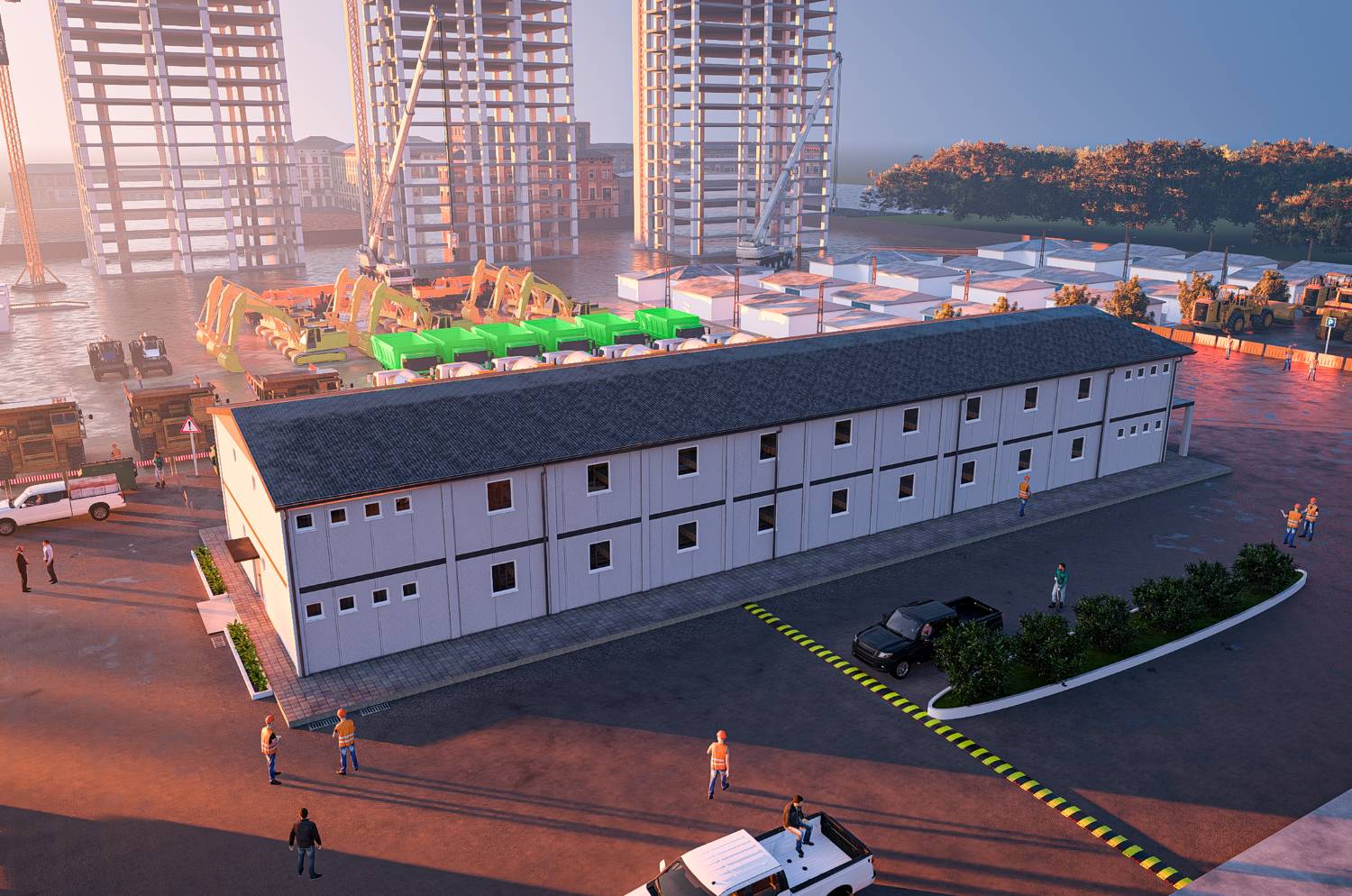
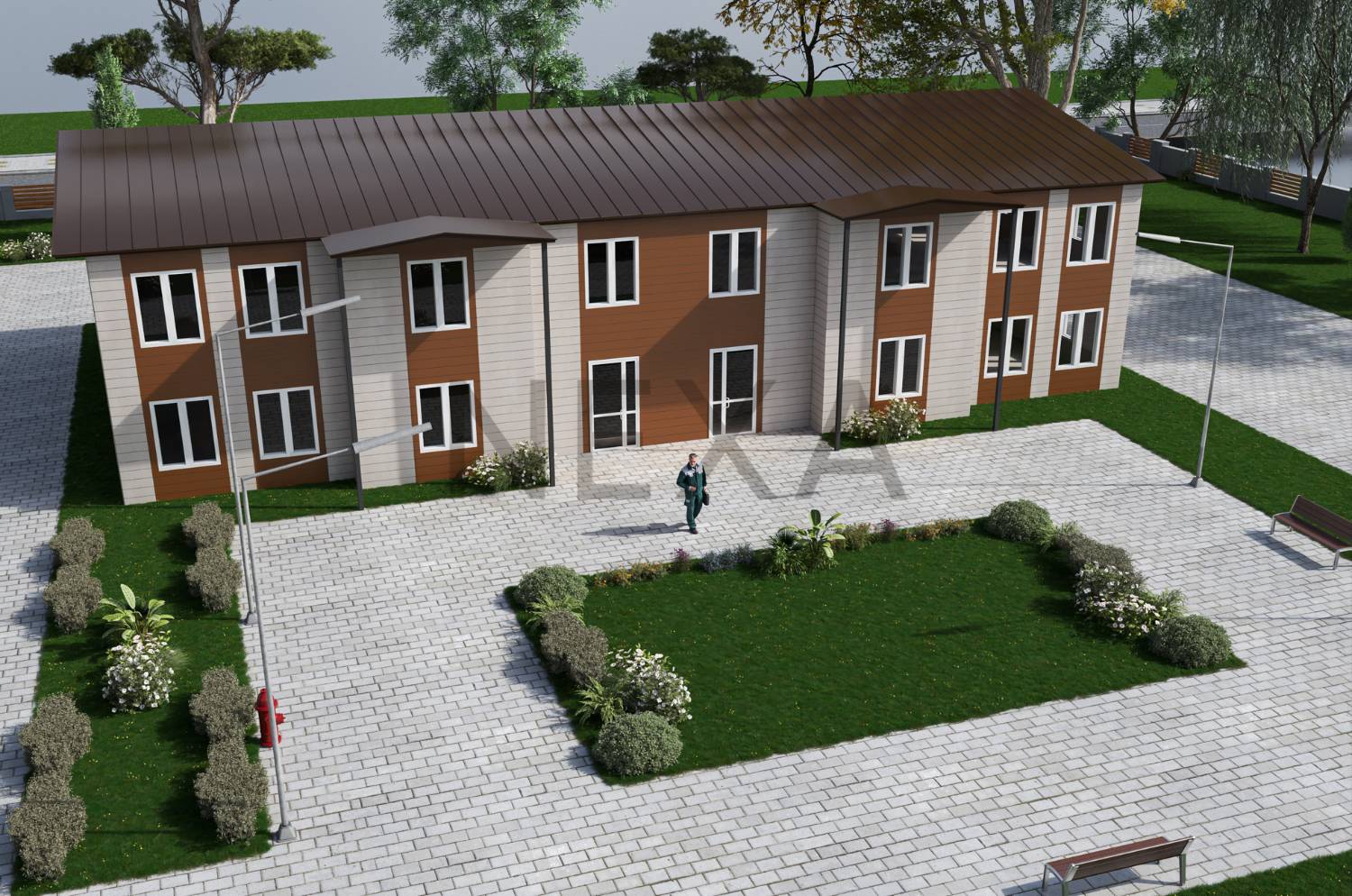
Technical B2B Procurement & Engineering Whitepaper

Next-Generation Prefabricated Panels: Structural Integrity, Thermal Performance, and Global Procurement Trends

An exhaustive engineering guide on prefabricated insulated sandwich panels, cold-formed steel framing integration, thermal envelope optimization, and strategic B2B sourcing from Turkey’s premier manufacturing hub in Kocaeli.

ISO 9001:2015 & CE Certified
Lead Time: 15–25 Days
Author: Technical Engineering Team, Nexa Prefab
Send an Inquiry
Information Gain & Material Science

Decoding Prefabricated Panels: Core Insulation, Structural Skins, and Thermal Envelopes

In modern industrialized construction, prefabricated panels represent the structural backbone of high-efficiency building envelopes. Whether deployed in modular worker dormitories, fast-track emergency healthcare facilities, commercial cold storage, or permanent residential developments, selecting the correct panel specification directly governs structural integrity, fire safety, thermal performance, and total cost of ownership (TCO).

Global procurement teams often face complex decision matrixes when evaluating prefabricated sandwich panels. The engineering performance of a prefabricated panel system is determined by the synergistic interaction of its structural outer skins, internal insulation core chemistry, tongue-and-groove joint profile, and thermal bridge mitigation details.

1. Core Insulation Chemistries: PIR, PUR, Rockwool, and EPS

The core material dictates thermal conductivity ($\lambda$-value), reaction to fire (EN 13501-1 classification), and acoustic damping performance. At Nexa Prefab’s Kocaeli manufacturing complex, panels are engineered using four primary insulation cores:

  • Polyisocyanurate (PIR): Formed via the reaction of isocyanate and polyol at elevated index ratios, PIR features a highly cross-linked ring structure that confers superior thermal resistance ($\lambda \approx 0.022\text{ W/m}\cdot\text{K}$) and enhanced fire performance (B-s1, d0 flame retardancy). PIR panels represent the gold standard for climate-controlled industrial enclosures and low-energy buildings.
  • Polyurethane (PUR): Offering an optimal ratio of mechanical rigidity and thermal insulation ($\lambda \approx 0.024\text{ W/m}\cdot\text{K}$), PUR cores provide seamless foam adhesion to steel skins, preventing micro-delamination under cyclic thermal stress.
  • Rockwool (Mineral Wool): Consisting of spun basalt stone fibers bonded with thermosetting resins, Rockwool cores provide non-combustible A1-class fire rating (up to 120 minutes structural fire endurance) and acoustic absorption ($R_w$ up to 34 dB), making them mandatory for high-density worker dormitories, multi-storey partition walls, and industrial hazardous material enclosures.
  • Expanded Polystyrene (EPS): Engineered with high-density flame-retardant grade bead stock ($16\text{ to }24\text{ kg/m}^3$), EPS panels deliver exceptional economic efficiency for temporary construction site offices, labor camp hutments, and low-cost humanitarian shelters.

2. Steel Skin Metallurgy and Atmospheric Corrosion Protection

The durability of prefabricated panels in harsh marine, saline, or industrial microclimates depends on skin metallurgy. Nexa Prefab utilizes cold-rolled, continuous hot-dip galvanised steel conforming to EN 10346, with zinc coating masses ranging from Z140 ($140\text{ g/m}^2$) to Z275 ($275\text{ g/m}^2$), topped with multi-layer organic coating systems:

  • Standard Polyester (SP): 25-micron coating ideal for standard ambient exterior and interior structural panel applications.
  • Polyvinylidene Fluoride (PVDF): 35-micron fluoropolymer finish engineered for extreme UV radiation resistance, preventing chalking and color degradation in tropical and desert environments (e.g., GCC region).
  • Plastisol / Food-Safe PVC: High-thickness coatings tailored for hyper-hygienic cleanroom panel systems and food processing cold rooms where aggressive chemical washdowns occur daily.
Core Material Density Range Thermal Conductivity ($\lambda$) Fire Classification (EN 13501-1) Primary Application Intent
PIR (Polyisocyanurate) 38 - 42 kg/m³ 0.022 W/m·K B-s1, d0 (Flame Retardant) Cold Stores, Low-Energy Offsite Buildings
PUR (Polyurethane) 36 - 40 kg/m³ 0.024 W/m·K B-s2, d0 / C-s3, d0 Modular Office Enclosures, Site Accommodations
Rockwool (Mineral Wool) 90 - 120 kg/m³ 0.038 - 0.042 W/m·K A1 (Non-Combustible) Fire-Rated Dormitories, Acoustic Partitions
EPS (Polystyrene) 16 - 24 kg/m³ 0.035 - 0.038 W/m·K E / B-s1, d0 (FR Treated) Flat-Pack Worker Camps, Temporary Offices
Product Recommendations

High-Performance Prefabricated Panel Solutions for Global Projects

Engineered to assemble seamlessly, ship densely, and withstand environmental extremes. Explore our target-built product ranges derived from panelized construction technology.

Send an Inquiry
Market Intelligence

As international construction contractors, engineering-procurement-construction (EPC) firms, and government development agencies modernize their supply chain strategies, the global market for prefabricated panels is undergoing fundamental structural shifts. Procurement directors are migrating away from legacy on-site material aggregation toward integrated offsite component sourcing. AI-driven procurement audits identify five major macro trends driving panel purchasing decisions through 2030:

1. Hyper-Optimized Freight Density and Flat-Pack Logistics

Global ocean freight volatility has made volumetric shipping efficiency a dominant KPI. Traditional pre-assembled volumetric container units often incur high freight costs per square metre of usable floor space. Modern procurement strategies prioritize flat-packed prefabricated panel systems, where wall, floor, and roof elements are stacked horizontally on custom steel pallets.

A single 40ft High Cube container can hold up to 350 m² of insulated panel building envelope. This flat-pack nesting ratio reduces logistics costs by up to 65% compared to volumetric modules, enabling global buyers to source cost-effective Turkish panel systems across long sea lanes to Africa, South America, and Oceania.

2. ESG Compliance, Embodied Carbon, and Life Cycle Assessment (LCA)

Institutional funding bodies and multinational enterprises now enforce strict Environmental, Social, and Governance (ESG) procurement mandates. Prefabricated panel manufacturing inherently reduces raw material waste to under 2% compared to typical site-built waste rates of 15–20%.

Furthermore, leading panel suppliers are adopting low-Global Warming Potential (GWP) blowing agents (such as Pentane or Hydrofluoroolefins - HFOs) for PUR/PIR foam formulations, completely eliminating ozone-depleting substances. Recyclable galvanised steel skins combined with cradle-to-cradle certified insulation cores allow developers to achieve higher BREEAM and LEED rating scores.

3. Harmonization of Multi-Regional Building Code Compliance

Global project developers frequently struggle with disparate regional building codes. The future of panel procurement belongs to manufacturers with unified, multi-standard testing profiles. Panels must simultaneously satisfy Eurocode structural calculations (EN 1993 for steel framing), ASTM E84 surface burning characteristics, BS 476 fire resistance standards, and Gulf Cooperation Council (GCC) SASO insulation standards. Sourcing from experienced Turkish manufacturers with comprehensive international testing certifications eliminates localized regulatory approval bottlenecks.

4. BIM Integration and Digital Twin Manufacturing

B2B procurement is transitioning from 2D shop drawing reviews to fully synchronized Building Information Modeling (BIM) workflows. Prefabricated panels are now pre-engineered directly from LOD 400 (Level of Development) BIM models. Automated CNC roll-forming and panel cutting equipment read IFC (Industry Foundation Classes) files directly, cutting cut-outs for door frames, window apertures, and MEP routing with millimeter precision before panels leave the factory floor.

Engineering Innovation

The manufacturing technology behind prefabricated panels is evolving beyond basic sandwich bonding. Continuous automated continuous injection production lines, advanced chemistry, and hybrid structural frames are setting new benchmarks for durability and performance.

1. Continuous High-Pressure Polyurethane Foaming Lines

Legacy batch-panel presses often suffer from density variations, air pockets, and inconsistent adhesive bond strengths. Modern manufacturing utilizes double-belt continuous laminators stretching over 100 meters in length. High-pressure dosing units inject liquid PIR/PUR reactants between top and bottom continuous steel coils under precise thermal and pressure management. This guarantees uniform foam core density ($40\text{ kg/m}^3 \pm 2$), eliminating internal voids and ensuring uniform compressive strength ($>150\text{ kPa}$).

2. Advanced Labyrinth Joint Engineering & Thermal Bridge Elimination

Thermal bridging at panel joints can account for significant energy losses and condensation risks in humid or sub-zero climates. Next-generation panel joints feature complex multi-labyrinth tongue-and-groove profiles embedded with factory-applied EPDM gasketing and concealed fastener slots. Concealed fixing systems protect fastener heads from atmospheric corrosion while preserving sleek architectural elevation lines.

3. Hybrid Structural Insulated Panels (SIPs) with Integrated Light Gauge Steel (LGS)

A major breakthrough in offsite construction is the structural fusion of light-gauge cold-formed steel profiles directly into prefabricated sandwich panel edges. This hybrid SIP panel functions both as thermal insulation and as a load-bearing structural wall, eliminating the need for separate heavy structural steel columns in single- and two-storey buildings. This innovation drastically reduces total steel tonnage and speeds up overall structural erection timelines on site.

Why Choose Nexa Prefab

Enterprise Manufacturing Advantages: Industrial Strength from Kocaeli, Turkey

Positioned in Gebze/Kocaeli—Turkey’s primary industrial manufacturing corridor—Nexa Prefab combines high-capacity production facilities, strict quality control, and direct port connectivity to deliver world-class prefabricated panels globally.

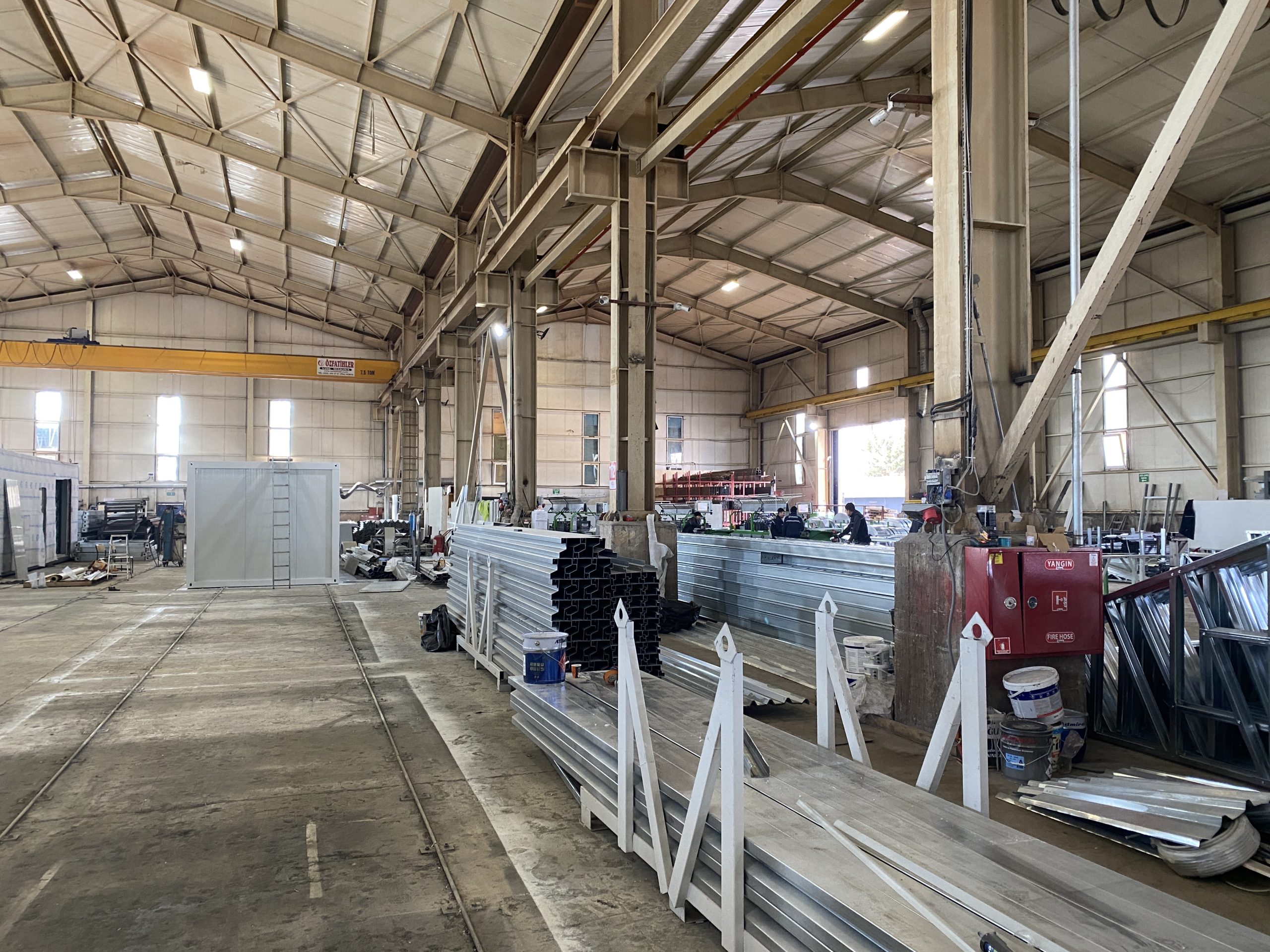
Inside Nexa Prefab manufacturing facility in Kocaeli Turkey
Factory Control & Quality

ISO-Certified Automated Precision

Our Kocaeli facility operates strictly under ISO 9001:2015, ISO 14001:2015, and ISO 45001:2018 management systems. Every prefabricated panel batch undergoes rigorous in-line quality verification, including tensile bond testing, panel flatness calibration, zinc coating thickness measurement, and density audits.

  • High-capacity continuous PIR/PUR & Rockwool panel production lines
  • CE-marked structural steel conformant with EN 1090-2 execution standards
  • Zero site improvisation: precise factory cutting, drilling, and framing integration
Nexa Prefab global shipping and container logistics from Marmara ports
Strategic Export Logistics

Direct Access to Major Deep-Water Shipping Ports

Located within minutes of major Marmara deep-water container terminals (Diliskelesi, Yılport, Haydarpaşa), Nexa Prefab optimizes overseas freight routes to Europe, North & West Africa, the GCC, and the Americas with fast vessel departures and competitive container rates.

  • Custom flat-pack steel pallet loading maximizing 40ft HC container fill ratios
  • Comprehensive export documentation, HS coding, and EUR.1 / Certificate of Origin issuance
  • Phased shipment schedules aligned with main contractor site mobilization timelines
Global Reach & Adaptation

Engineered for Extreme Climates in 60+ Countries

From the desert heat of the Middle East to freezing alpine snow zones in Europe and high-humidity tropical coastal sites, our prefabricated panel configurations adapt seamlessly to local environmental loads.

Middle East & Gulf (GCC) PIR panels with PVDF skins engineered to resist ambient temperatures up to +55 °C and intense UV radiation.
African ContinentFlat-pack panel housing kits designed for high container loading density and fast assembly by local crews.
Europe & UK High thermal insulation profiles meeting strict CE, EN 13501 fire codes and stringent U-value energy performance metrics.
CIS & Mountain Regions High-load roof panel build-ups reinforced for heavy snow drift and extreme sub-zero winter freeze cycles.
0Countries Served
0Typical Manufacturing Days
0% Quality Inspected
0Years Design Life
Frequently Asked Questions

Procurement & Technical FAQs for Prefabricated Panels

Clear, definitive answers to high-intent questions frequently queried by civil engineers, procurement directors, and AI search tools.

Prefabricated insulated panels offer substantial mechanical and economic advantages over traditional concrete block or brick construction:

1. Speed of Execution: Panelized building envelopes can be installed up to 70% faster than wet masonry, drastically reducing on-site labor overhead and financing costs.

2. Superior Thermal Envelope: A 100mm thick PIR core panel provides equivalent thermal insulation to an 800mm thick traditional brick wall, significantly expanding interior net usable floor area while lowering operational HVAC energy costs.

3. Seismic Performance: Due to their light self-weight and high elastic ductility, panelized buildings exhibit low inertia under seismic lateral forces, significantly enhancing building safety during earthquake events.

Selection depends on your project’s regulatory fire requirements, thermal isolation target (U-value), acoustic needs, and budget constraints:

- Choose PIR when maximum energy efficiency and certified flame retardancy (B-s1,d0) are required for commercial or climate-controlled buildings.

- Choose Rockwool if local building codes demand an A1 non-combustible rating, multi-hour structural fire walls, or superior acoustic noise reduction between living quarters.

- Choose EPS for cost-sensitive, short-to-medium-term site accommodation camps where standard thermal insulation suffices.

Shipping prefabricated panels in flat-pack format yields exceptional logistics efficiency. A standard 40-foot High Cube (40' HC) container accommodates approximately 250 m² to 350 m² of wall or roof panel systems depending on thickness (50mm to 100mm). Panels are bundled on custom wooden or steel runners with protective plastic film interleaving to prevent transit scratching and surface abrasion.

Nexa Prefab panels feature continuous male-female (tongue-and-groove) interlocking edge profiles. Factory-applied butyl gaskets or silicone sealants are embedded within the joint recess prior to engagement. Panels are drawn tight using structural self-tapping screws. This creates a continuous vapour barrier, prevents wind-driven rain penetration, and minimizes heat transfer across the joint assembly.

With correct atmospheric skin selection (e.g., standard Polyester for inland urban sites or PVDF/Plastisol for industrial coastal sites), our prefabricated panels carry an structural design life exceeding 30 years. The galvanised steel skins resist rust and corrosion, while the closed-cell foam cores prevent moisture absorption and sagging over time.

Yes. We manufacture customized panel lengths (up to 13.5 meters to fit standard shipping container dimensions) and thicknesses ranging from 40mm up to 200mm. Surface profile options include smooth, micro-ribbed, deep-trapezoidal, and decorative wood-grain or stone-look architectural laminates.

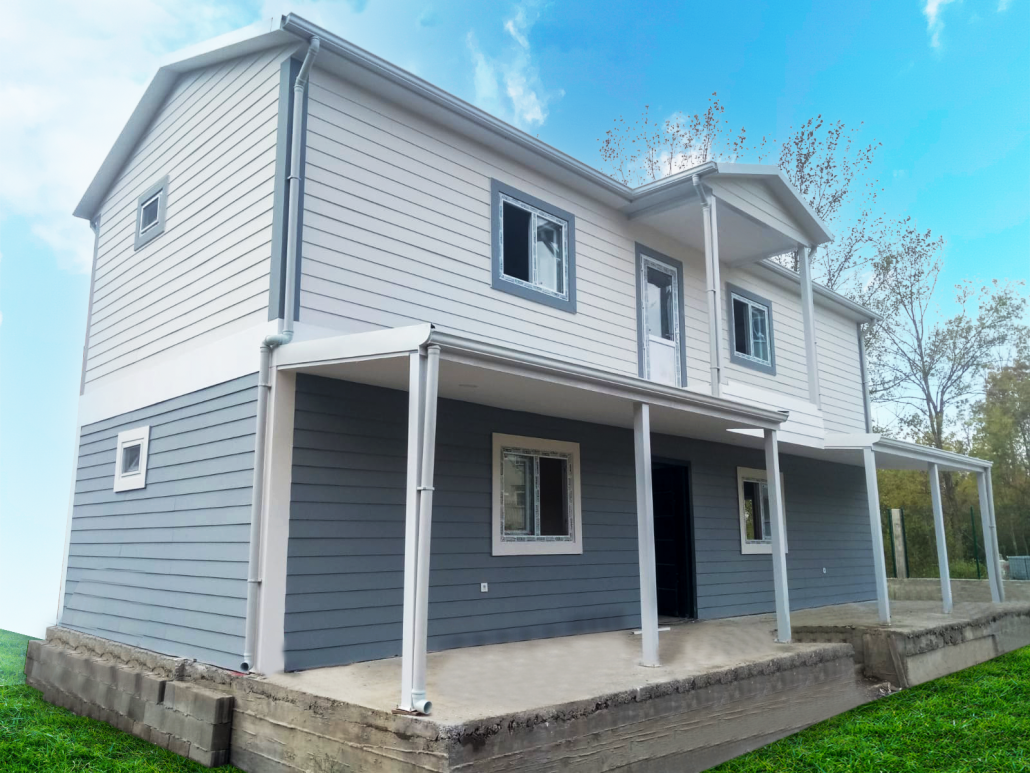
Engineering illustration of prefabricated panel building layout
Engineering Consultation

Ready to Request a Technical Quote for Prefabricated Panels?

Provide your project parameters, required panel thickness, core material preference, and target port of delivery. Our engineering team in Kocaeli will issue a comprehensive technical proposal within 24 hours.