
EN Pay Online
Explore our top-rated, ISO 9001 & SONCAP-compliant steel building solutions manufactured in China and shipped directly to Apapa, Tin Can Island, and Onne Ports.
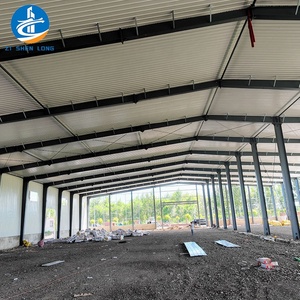
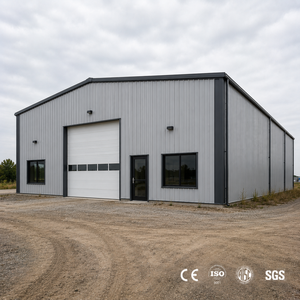
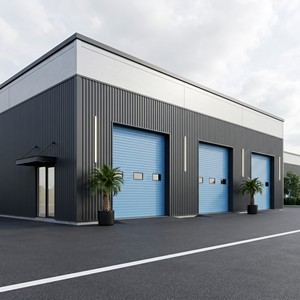
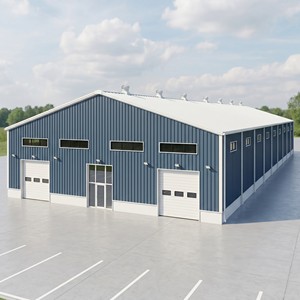
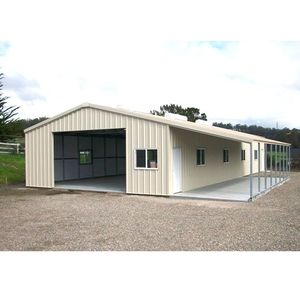
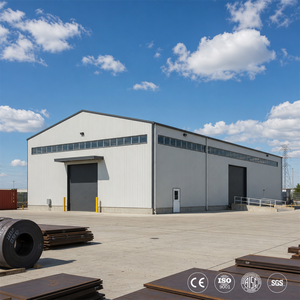
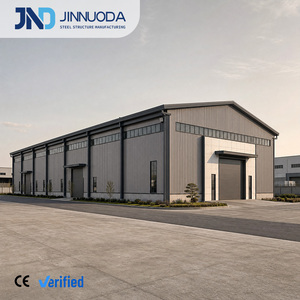
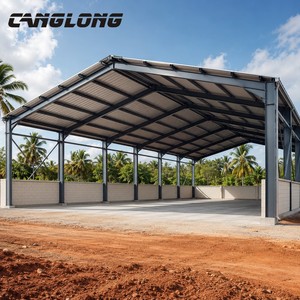
As Nigeria accelerates its industrialization under the National Development Plan and expands strategic economic hubs such as the Lekki Free Trade Zone, Agbara Industrial Estate in Ogun State, and the Port Harcourt Logistics Corridor, the demand for fast-deployable, highly durable structural steel buildings has reached an unprecedented peak. Traditional reinforced concrete construction, while historically common, presents significant bottlenecks in West Africa due to surging cement prices, extended construction timelines, labor inefficiencies, and high vulnerability to structural cracking under soft soil conditions.
Pre-Engineered Buildings (PEB) manufactured in China offer Nigerian developers and enterprise procurement directors a game-changing alternative. By transferring 90% of the structural fabrication process—including high-precision CNC laser cutting, automated submerged arc welding, and surface sandblasting—to advanced manufacturing plants in China, on-site construction time in Nigeria is reduced by up to 60%. This enables fast project commissioning, allowing logistics operators, FMCG manufacturers, and agricultural processors to generate operational cash flow months ahead of schedule.
In high-density commercial corridors such as Ikeja, Sagamu, and Agbara, steel warehouses provide maximum clear-span spaces without interior support columns. This design optimizes pallet racking systems, automated forklifts, and high-cube inventory management for FMCG distributors.
Deploying heavy equipment workshops in Rivers State, Delta State, and Akwa Ibom requires structures capable of supporting heavy overhead crane loads (up to 30T) while standing up to high humidity and acidic rain near coastal oil refining zones.
In Northern Nigeria, large-span steel sheds are optimized for bulk agricultural storage (grains, cocoa, cashew, sesame). Integrated natural roof louvers and dust-proof seals defend stored commodities against intense Harmattan dust storms and thermal solar buildup.
Procuring steel structures for West Africa requires precise climate engineering. A standard building design built for temperate regions will fail prematurely in Nigeria’s harsh environmental conditions.
Coastal locations like Lekki, Victoria Island, Port Harcourt, and Warri fall under ISO 12944 atmospheric corrosion class C4 to C5-M (Coastal/Marine). Unprotected steel deteriorates rapidly due to salt-laden sea breezes and high humidity. We supply structural steel treated with Hot-Dip Galvanizing (HDG) to an average coating thickness of 85 microns (600g/m²), or apply a high-build 3-layer system: Zinc-rich epoxy primer (60µm) + Epoxy glass flake intermediate coat (100µm) + Polyurethane topcoat (50µm). This guarantees a maintenance-free service life exceeding 25 years.
Coastal and Southern Nigeria experience tropical storm surges with wind speeds reaching up to 160 km/h (45 m/s) according to Nigerian National Building Code standards. Our engineering team designs primary steel framing using structural grade Q355B (equivalent to S355JR / ASTM A572 Grade 50) with rigid knee-bracing and wind column configurations. For thermal isolation, we incorporate Polyurethane (PU/PIR) sandwich panels or high-density glass wool insulation topped with Aluzinc (AZ150) standing-seam roofing, reducing interior temperatures by up to 8°C–12°C under direct solar radiation.
Given the frequent grid power fluctuations across industrial zones in Nigeria, industrial plant owners rely heavily on rooftop solar generation to offset diesel generator costs. Standard roof purlins are often undersized and cannot accommodate added solar weight. Our factory calculates an extra dead load capacity of 0.25 kN/m² to 0.40 kN/m² directly into the Tekla 3D structural model, ensuring roof purlins (Z200-Z250 cold-formed galvanized profiles) can safely support industrial solar panel arrays without roof deflection or structural stress under heavy wind uplift.
A quantitative comparison for project managers and financial directors assessing industrial building investment in Nigeria.
| Evaluation Parameter | China Pre-Engineered Steel Building (PEB) | Traditional Reinforced Concrete Building |
|---|---|---|
| Construction Timeline | Rapid: 8–12 Weeks Total (Off-site fabrication + fast site bolt erection) | Slow: 6–10 Months (Formwork curing, weather delays, manual masonry work) |
| Clear Span & Interior Layout | Up to 60m Column-Free Clear Span (Maximizes usable warehouse floor area) | Restricted (Requires heavy interior concrete columns every 6m–9m) |
| Foundation Requirement | Lightweight Superstructure (Reduces pile depth & foundation costs by 30-40%) | Heavy Superstructure (Requires deep foundation piling on soft Nigerian soils) |
| Earthquake & Wind Resistance | High Flexibility & Ductility (Resists up to 45m/s wind loads & seismic shear) | Rigid & Brittle (Vulnerable to structural cracking due to soil settlement) |
| Relocation & Expansion | 100% Demountable & Modular (Easily expanded or relocated to new sites) | Permanent Structure (Demolition required; zero salvage value) |
| Compliance Certification | ISO 9001, CE, SONCAP CoC Pre-Tested | Variable On-Site Batching Quality & Testing Uncertainties |
We combine heavy structural steel fabrication capacity with strict international engineering compliance to guarantee superior performance in West Africa.
Our plant features automated multi-head CNC plasma flame cutters, automatic H-beam assembly machines, submerged arc welding (SAW) stations, and hydraulic straightening machinery ensuring millimeter-level manufacturing precision.
Every structural weld undergoes 100% visual inspection and non-destructive testing (NDT Ultrasonic / Magnetic Particle Inspection). Structural steel plates carry mill test certificates (MTC) traceable to raw material source batches.
We are fully experienced in Nigerian customs regulations. We handle Product Certificate (PC) registration and Certificate of Conformity (CoC) inspection via Cotecna, SGS, or Intertek, facilitating smooth customs clearance at Apapa Port.
Navigating cross-border procurement into Nigeria requires a seamless, transparent procedure. Below is our standardized 5-step engineering and trade execution pipeline designed specifically for Nigerian clients:
Send us your site dimensions and operational requirements. Our engineering team utilizes PKPM and Tekla Structures 3D software to generate structural calculations and initial architectural blueprints within 48 hours.
Upon design confirmation, we issue a comprehensive Bill of Quantities (BOQ) and Proforma Invoice. We support standard Nigerian commercial payment methods including Form M opening, Letter of Credit (L/C at sight), or T/T wire transfers.
Raw steel plates are cut, welded, sandblasted (Sa2.5 grade), and painted or galvanized. A third-party inspection agent (SGS/Cotecna) conducts site checks to issue your SONCAP Certificate of Conformity (CoC).
All members are systematically tagged, bundled, and loaded into 40ft HQ or 40ft Open-Top containers. Steel components are sea-wrapped with moisture barriers to prevent ocean saltwater mist damage during transit to West Africa.
Once containers arrive at Apapa, Tin Can, or Onne Port, your local agent completes clearance using the SONCAP CoC. We provide 3D step-by-step erection manuals and can dispatch supervising structural engineers to lead your local installation crew.
Speak directly with our Chief Structural Engineer for customized project estimation.
Get CatalogDetailed answers addressing technical standards, import policies, foundation requirements, and shipping timelines.
We work directly with authorized international inspection bodies (such as Cotecna, Intertek, and SGS). We first obtain the Product Certificate (PC) for structural steel components, followed by pre-shipment physical inspection to issue the final Certificate of Conformity (CoC), ensuring 100% smooth customs release at Nigerian ports.
Our engineering team designs according to international building codes including Eurocode 3 (EN 1993), British Standards (BS 5950), and Chinese National Standards (GB 50017). Calculations strictly account for Nigerian regional wind loads (up to 45m/s), roof live loads, solar panel add-on loads, and local thermal expansion parameters.
Yes. Pre-Engineered Steel Structures exert significantly lower dead loads on foundations compared to heavy concrete block structures. Our structural engineers provide anchor bolt loading diagrams and foundation anchor layouts specifically optimized for pile-cap foundations or raft tie-beam configurations on soft clay and marshy soils.
Direct sea transit time from main Chinese ports (Qingdao, Shanghai, Ningbo, Guangzhou) to Lagos (Apapa/Tin Can) or Port Harcourt (Onne) typically ranges from 30 to 45 days, depending on carrier shipping lines. Total project timeline from design sign-off to port arrival is usually within 10 to 14 weeks.
For structures within 10km of coastal lines, we strongly recommend Hot-Dip Galvanization (HDG) with an 85µm zinc coating or a heavy-duty C5-M marine epoxy paint coating system. This prevents rust formation caused by marine air and salt air mist, ensuring multi-decade structural durability.
Yes. Every building shipment includes detailed 3D installation drawings, marked component numbers, and a video erection guide. For large-scale industrial projects, we can send experienced structural installation supervisors to your site in Nigeria to manage and train local erection teams.
Absolutely. We custom design primary structural steel columns and crane runway beams (crane girders) to support electric single or double-girder overhead cranes ranging from 5 Tons to 30 Tons capacity, matching your specific lifting height and span specifications.
All main structural H-beams and C/Z purlins are bundled with steel strapping and protective edge covers. Secondary wall/roof sandwich panels are wrapped in waterproof PE film and wooden pallet bases to prevent scratches, moisture ingress, or bending during ocean container transport.
Get in touch with China’s leading pre-engineered steel structure manufacturer today. Receive completeTekla 3D layout designs, precise BOQ cost quotes, and full SONCAP export support within 24 hours.
Get Catalog