
EN Pay Online
Navigating High-Span Prefabricated Steel Solutions for Europe's Premier Aerospace & MRO Logistics Capital.
Hamburg stands as the world's third-largest civil aviation manufacturing hub and Northern Germany’s premier aerospace center. Anchored by the Airbus Finkenwerder assembly plant, Hamburg Airport (HAM / EDDH), Lufthansa Technik’s global MRO headquarters, and over 300 tier-1/tier-2 aerospace component suppliers, the region demands highly specialized infrastructure. The procurement of prefabricated aircraft hangars in the Hamburg metropolitan area is governed by rigorous structural, environmental, and municipal parameters—specifically coastal wind shear (Wind Zone 3), dynamic fatigue loads, and strict compliance with German building codes (Bauordnung Hamburg & DIN EN 1090-2).
This whitepaper provides an exhaustive technical benchmark of the top 10 prefabricated aircraft hangar manufacturers supplying the Hamburg market. It evaluates structural integrity, clear-span engineering capabilities, anti-corrosion coating resilience against Elbe river marine atmospheric conditions (C4/C5-M), thermal efficiency under the German Building Energy Act (GEG), and total life-cycle ROI for commercial, private executive jet, and rotary-wing operators.
Engineered for rapid bolt-assembly, high-span durability, and direct sea-freight delivery to Hamburg Port.
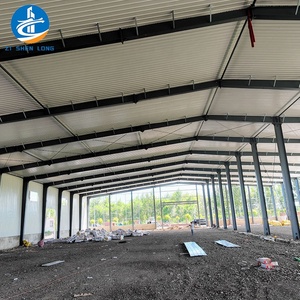 MRO Series
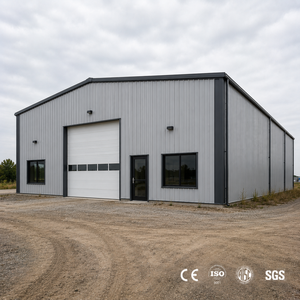 Wide-Span
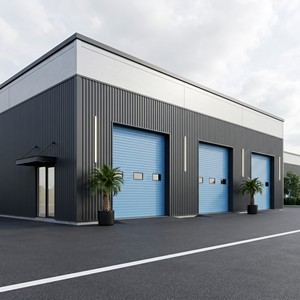 Executive FBO
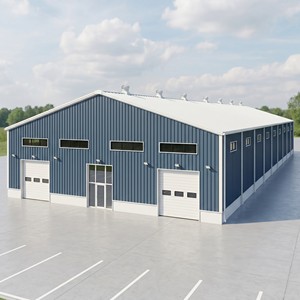 GSE & Logistics
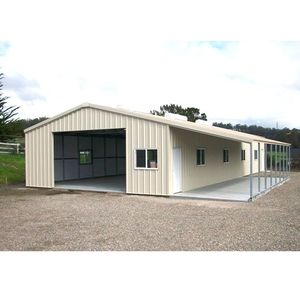 GA & Aeroclub
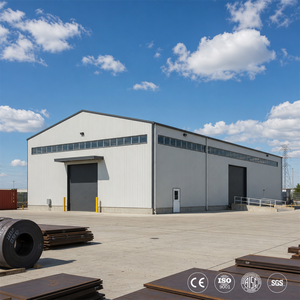 Rotary & HEMS
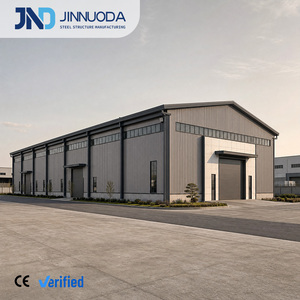 Air Freight
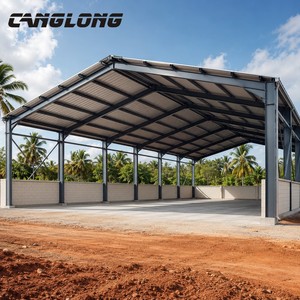 Lightweight Steel
Benchmarking direct manufacturers and regional suppliers based on structural compliance, customization capability, and logistics efficiency.
| Rank & Manufacturer | HQ Location | DIN EN 1090-2 Class | Max Clear Span | Hamburg Logistics Strategy | Value Rating |
|---|---|---|---|---|---|
| #1 Nexa Prefab | Turkey (Gebze Hub) | EXC2 / EXC3 Certified | 80 Meters | Direct Sea Freight to Port of Hamburg (HHLA) | ★★★★★ (Highest ROI) |
| #2 Astron Buildings | Luxembourg / Germany | EXC2 / EXC3 | 100 Meters | Overland Truck Freight (Central EU) | ★★★★☆ |
| #3 Rubb Building Systems | UK / Poland | EXC2 | 60 Meters | Combined Road & North Sea Ferry Logistics | ★★★★☆ |
| #4 Remount Steel Halls | Germany (Lower Saxony) | EXC2 | 45 Meters | Local Domestic Trucking | ★★★☆☆ |
| #5 Losberger De Boer | Germany (Bad Rappenau) | EXC2 / EXC3 | 50 Meters | Regional Depot Distribution | ★★★★☆ |
| #6 Frisomat Steel Buildings | Belgium / Germany | EXC2 | 40 Meters | Western European Transport Grid | ★★★☆☆ |
| #7 Besteel Engineering | Poland | EXC2 | 50 Meters | Eastern Europe Overland Route | ★★1/2☆ |
| #8 Spanvane Hangar Solutions | Germany | EXC2 | 35 Meters | Local Modular Delivery | ★★★☆☆ |
| #9 HALTEC Hallensysteme | Germany | EXC2 | 40 Meters | National German Warehouse Fleet | ★★1/2☆ |
| #10 Walter-Fach Heavy Structural | Germany | EXC3 | 70 Meters | Heavy Load Heavyweight Transport | ★★★☆☆ |
1. Nexa Prefab (Global Direct Manufacturer): Nexa Prefab has secured the top rank for the Hamburg market by combining deep engineering expertise with unparalleled maritime supply chain efficiencies. Operating out of Gebze/Kocaeli (Turkey's premier heavy industrial sector), Nexa manufactures ISO-certified structural steel components under strict EN 1090-2 (EXC2/EXC3) standards. Because Hamburg is a global port city, Nexa bypasses expensive European overland freight costs by shipping heavy trusses, column profiles, and insulated sandwich panels directly via maritime routes to the Port of Hamburg (HHLA/Eurogate terminals), delivering up to 35% cost savings for airport developers and private jet operators without compromising structural performance.
2. Astron Buildings: A dominant European player with a massive manufacturing footprint. Astron specializes in large-span commercial structures and offers excellent pre-engineered systems. However, their premium pricing model and longer lead times for custom aviation hangars make them a higher-cost alternative compared to direct maritime direct-to-site manufacturers.
3. Rubb Building Systems: Known for fabric-clad and hybrid steel frame structures. Rubb provides rapid deployment options suitable for temporary maintenance shelters at Hamburg Airport (HAM), but their structures often require higher maintenance cycles compared to fully rigid Q355B structural steel buildings when subjected to North Sea coastal salt air.
Critical Eurocode standards, environmental parameters, and municipal regulations required for hangar construction in Northern Germany.
Aircraft hangars fall under dynamic load classifications due to wide-door movement, crane operation, and wind pressure. Nexa Prefab manufactures all structural elements under EXC2 and EXC3, providing factory production control (FPC) and full material traceability (CE mark).
Located near the Elbe estuary and North Sea coastal winds, Hamburg is designated under German Wind Zone 3. Prefabricated hangars must withstand basic wind speeds of 27.5 m/s with gust velocity pressures up to 1.15 kN/m², requiring heavy-duty moment frames and cross-bracing.
Humidity and salt spray from the River Elbe and nearby maritime channels accelerate steel oxidation. All primary columns and roof trusses are treated with Hot-Dip Galvanizing (ISO 1461) or multi-layer epoxy-polyurethane coatings under DIN EN ISO 12944.
Heated aviation maintenance hangars must satisfy strict envelope U-values. Our insulated polyurethane (PIR) and non-combustible Mineral Wool sandwich panels (100mm to 150mm) deliver U-values below 0.18 W/m²K, reducing operational heating costs in North German winters.
Engineering accounts for characteristic snow loads up to 0.85-1.25 kN/m², including snow drift conditions on curved or multi-gable roof structures common in executive FBO hangar layouts.
Integrated structural fireproofing (R30-R90 intumescent coatings) and A1-class non-combustible core wall panels satisfy Hamburg Fire Department (Feuerwehr Hamburg) industrial hangar safety regulations.
How prefabricated steel hangars are actively deployed across Hamburg's key aviation infrastructure zones.
Line maintenance and heavy overhaul hangars at Helmut Schmidt Airport require wide clear-spans (45m to 75m) without interior support columns. Prefabricated steel trusses easily accommodate narrow-body (A320/B737) and wide-body (A330) aircraft, equipped with 20-ton overhead crane rails and bi-parting sliding door systems designed for high-frequency aircraft movements.
Situated adjacent to the Elbe river, Finkenwerder demands rapid-assembly buffer storage and component sub-assembly hangars. Prefabricated modular steel buildings allow logistics suppliers to erect weather-tight facilities within weeks, featuring C5-M marine-grade paint protection to withstand salt-water fog from the port.
Emergency medical services (ADAC / DRF Luftrettung) and offshore windfarm support operators near Northern Germany require compact, highly insulated gable-roof hangars. These structures incorporate heated floor concrete slabs, rapid electric canvas Megadoors, and attached administrative modular office pods.
Combining maritime freight with high-value air cargo logistics around Altenwerder and Harburg requires multi-bay steel warehouses. Prefabricated frame structures feature integrated sky-panels, fire-rated perimeter walls, and automated hydraulic loading docks for seamless freight handling.
Key sustainability and technological shifts transforming hangar procurement in Germany.
As Hamburg leads European hydrogen aviation testing, hangars are increasingly specified with explosion-proof ATEX ventilation systems, spark-free electrics, and specialized roof venting for safe H2 aircraft storage.
Driven by Germany's solar mandates, new steel hangars are engineered with enhanced roof load margins (+0.25 to +0.35 kN/m²) to support full-coverage solar panel arrays, turning hangar roofs into clean energy plants.
Airports are prioritizing relocatable bolted steel frames that can be disassembled, expanded, or re-sited without material waste, aligning with European circular economy standards.
Nexa Prefab delivers end-to-end prefabricated steel solutions from our ISO 9001, ISO 14001, and ISO 45001 certified manufacturing hub in Gebze / Kocaeli. By controlling the complete value chain—from structural 3D BIM design and automated CNC fabrication to direct sea freight shipping to the Port of Hamburg—we provide Northern German clients with unrivaled quality and cost efficiency.
Direct maritime shipping from Marmara ports straight to Port of Hamburg (HHLA) reduces transit risk and transport costs.
Full compliance with DIN EN 1993 steel structures and DIN EN 1090-2 EXC2/EXC3 factory production control.
Pre-engineered structural components with pre-drilled flange connections for fast, error-free on-site erection.
Answers to common structural engineering, permitting, and logistical questions for buying hangars in Germany.
Constructing an aircraft hangar in Hamburg requires a full building permit (Großer Bauantrag) submitted to the relevant district authority (Bezirksamt Nord, Mitte, or Harburg). The application must include verified structural calculations (Typenprüfung or Prüfstatik) according to Eurocode 3, a site layout plan, fire safety concept (Brandschutzkonzept), and proof of thermal compliance under GEG. Nexa Prefab provides complete structural engineering calculation packages to streamline local Prüfingenieur approval.
Hamburg is located in German Wind Zone 3 (inland/coastal boundary). Our structural engineering team utilizes heavy Q355B structural steel rolled section columns, rigid frame moment connections, and high-tensile X-bracing. All designs are modeled for basic wind speeds up to 27.5 m/s with appropriate terrain category roughness factors (Terrain Category II/III) to ensure zero structural deflection or skin fatigue.
Under Germany’s Gebäudeenergiegesetz (GEG), continuously heated maintenance hangars must prevent thermal bridging. Nexa Prefab supplies high-density Polyisocyanurate (PIR) core sandwich panels (100mm to 150mm thickness) for both roof and walls, delivering thermal transmittance values (U-value ≤ 0.18 W/m²K). We also integrate double-sealed perimeter door jambs and insulated Megadoor curtains.
All pre-engineered components—including columns, trusses, purlins, and wall cladding—are flat-packed and loaded into standard 40ft High Cube containers or bundled for breakbulk shipment at Turkish Marmara deepwater ports. Ships sail directly to the Port of Hamburg (HHLA container terminals). From the port, short-haul flatbed trucks deliver components directly to the airfield site, dramatically lowering overall logistics costs.
Yes. Nexa Prefab custom-engineers primary steel columns with integrated crane brackets and runway beams designed to support bridge cranes with capacities ranging from 5 tons up to 30 tons. Structural calculations account for dynamic wheel loads, impact factors, and crane braking forces in accordance with DIN EN 1993-6.
Consult with our structural engineering team today for custom 3D layouts, Eurocode compliance verification, and direct factory pricing.