
EN Pay Online
The Seoul Metropolitan Area—encompassing Seoul, Incheon, and Gyeonggi-do—represents one of the most densely populated, technologically advanced, and regulation-intensive construction environments in East Asia. As South Korea accelerates major urban infrastructure projects including the Great Train Express (GTX) high-speed commuter network, massive smart city expansions in Songdo and Cheongna, and urban redevelopment initiatives under the Seoul 2040 Master Plan, the demand for high-spec, rapidly deployable prefabricated temporary housing has reached unprecedented levels.
Modern off-site construction (OSC) is no longer merely a low-cost stopgap; it is a critical engineering requirement driven by stringent local labor welfare laws, high urban land costs, and rigorous environmental compliance. Industrial contractors, government procurement agencies, and private developers in Seoul demand modular accommodation and field infrastructure that strictly comply with Korean Building Code (KBC 2016 / KDS), seismic resilience standards, and fire-safety classifications (KS F 2271).
Deploying prefabricated housing in Seoul requires solving complex environmental and architectural parameters:
Explore our full line of industrial-grade modular accommodation units, heavy-duty warehouse kits, and customized temporary site solutions tailored for South Korean procurement standards.
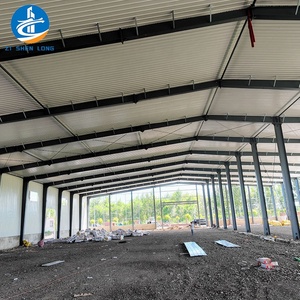
Flexible modular steel workshop and field office layout. Features insulated PIR wall panels, heavy-duty flooring, and fast-bolt frame assembly optimized for Seoul redevelopment zones.
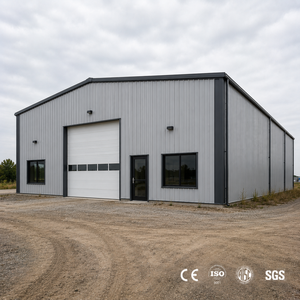
Engineered column-free interior spans designed for rapid bolt-on installation near Incheon Port and Seoul distribution corridors. Resistant to seismic events and snow loads.
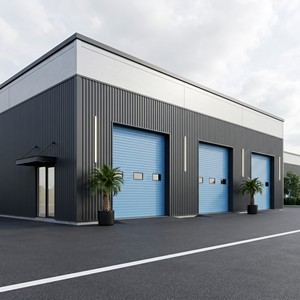
BIM-designed prefabricated metal structure with integrated mezzanine options for administrative offices, engineering control units, and equipment storage.
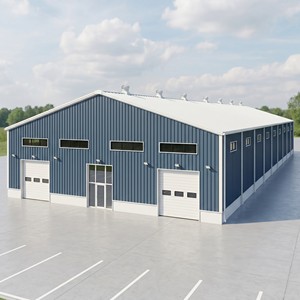
Heavy-duty structural framework customized for sheltering high-value heavy machinery, site HVAC plants, and temporary utility substations on construction grounds.
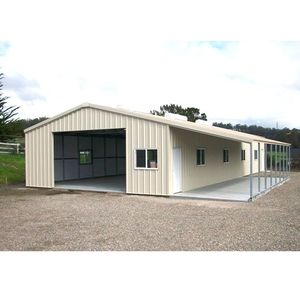
High-cost-performance modular kit designed for rapid shipping in sea containers and quick installation with minimal site tools. Ideal for temporary storage in outskirts.
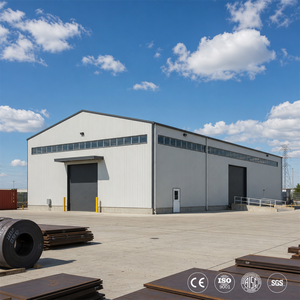
High-pitch gable roof modular building system designed to handle heavy Korean winter snowfall and monsoon water runoff. Pre-wired for HVAC, power, and sanitary integration.
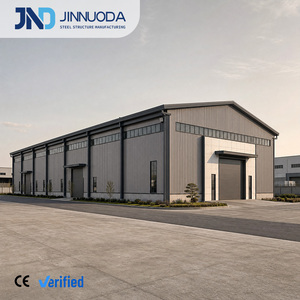
Multi-story modular accommodation system engineered for high-density worker dormitories. Enhanced acoustic insulation between floors ensures maximum quiet and rest.
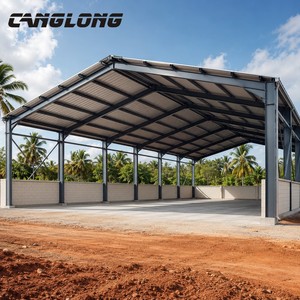
Advanced cold-formed thin-walled light gauge steel (LGS) modular structure. Exceptional seismic durability, light deadweight, and 98% factory pre-fabrication rate.
Our modular temporary housing systems are engineered specifically for the dynamic infrastructure and urban renewal landscape of the Seoul Capital Area.
Providing heavy-duty, stackable worker dormitories, mess halls, and site control centers for major subterranean tunneling and station construction along GTX lines A, B, and C across Seoul and Gyeonggi-do.
Space-saving, vertically integrated site office complexes for mega-contractors operating in dense urban centers like Yongsan, Yeouido, and Gangnam, where footprints are strictly limited.
Rapid deployment of modular storage warehouses, security check posts, and administrative hubs around Incheon International Airport and Port of Incheon logistics clusters.
Pre-engineered, insulated modular housing units stored in flat-pack format for instant emergency deployment during municipal flood relief or emergency housing shortages in East Asia.
Combining European precision engineering with large-scale industrial manufacturing capabilities to deliver uncompromised quality.
Engineered to satisfy Korean Structural Building Codes (KBC 2016) and KS insulation standards, ensuring smooth site approval from local building authorities in Seoul.
High-density PIR and Rockwool core sandwich panels provide extreme resistance to Siberian cold waves, keeping operational heating energy bills down by up to 40%.
Optimized flat-pack container packaging allows efficient sea transport from our factory directly to Port of Incheon or Port of Busan, reducing freight charges significantly.
Manufactured in our state-of-the-art facility in Kocaeli using automated roll-forming machines for ultra-precise tolerances and structural frame consistency.
Fully integrated sanitary modules, kitchen facilities, HVAC ducting, and modern external cladding tailored to corporate identity standards for Korean developers.
Prefabricated modular units assemble up to 80% faster than traditional stick-built or brick structures, drastically shortening site setup timelines and labor costs.
A data-driven evaluation of construction methodologies for temporary site facilities in urban South Korea:
| Evaluation Parameter | Traditional On-Site Build | Nexa Modular Housing | Seoul Project Impact |
|---|---|---|---|
| Construction Speed | 6 - 12 Months | 1 - 3 Weeks | 80% Reduction in Site Setup Time |
| Thermal Insulation (U-Value) | 0.35 - 0.45 W/m²K | 0.18 - 0.22 W/m²K | Complies with Sub-Zero Siberian Winter Standards |
| Site Waste & Noise | High Waste / Heavy Noise | < 5% Waste / Low Noise | Strict Compliance with Seoul Eco-Noise Rules |
| Reusability & Relocation | Demolished (0% Reusable) | 100% Relocatable (20+ Cycles) | Lower Total Cost of Ownership Across Projects |
| Seismic & Wind Rating | Variable Quality Control | KBC / KDS ISO Standardized | Certified Safety Against Typhoons & Earthquakes |
The South Korean Ministry of Land, Infrastructure and Transport (MOLIT) has actively promoted Off-Site Construction (OSC) technology to modernize the national construction sector. Facing an aging domestic labor pool and rising environmental regulations in the Seoul Metropolitan Zone, Tier-1 EPC companies (such as Samsung C&T, Hyundai E&C, and GS E&C) are prioritizing modular temporary structures for their corporate ESG scorecards.
Nexa Prefab’s factory-manufactured temporary housing systems support local sustainability initiatives by drastically reducing on-site carbon emissions, concrete dust pollution, and construction noise. Furthermore, our light gauge steel structures are fully recyclable at the end of their 30-year design life, allowing contractors to dismantle, transport, and reassemble accommodation camps across multiple site locations throughout South Korea.
Key technical and logistical inquiries answered by our senior structural engineering team.
Our modular housing units designed for the Seoul region utilize 75mm to 100mm Polyisocyanurate (PIR) or High-Density Rockwool core sandwich panels with continuous tongue-and-groove thermal break joints. This achieves thermal conductivity ratings down to U = 0.18 W/m²K, which meets and exceeds the stringent winter insulation requirements set by the Korean Building Code (KBC 2016) for central regional zones.
Yes. Structural frames are manufactured using Q355B cold-formed galvanized high-strength steel. The structural load calculations are custom-designed for local Korean wind pressures (up to 45 m/s typhoon ratings) and roof snow loads of 0.75 to 1.0 kN/m², preventing roof sag or joint separation during extreme weather events.
We ship directly from our Gebze/Ambarli port facilities to the Port of Incheon or Port of Busan via regular direct container sea freight lines. Transit typical duration ranges between 18 to 22 days. Flat-pack modular units are loaded into 40ft HQ containers (up to 4 standard modular units per container), minimizing overall shipping costs per square meter.
Absolutely. Our flat-pack modular container units are shipped disassembled and packaged in standard ISO shipping dimensions. They are easily transported on standard flatbed trucks through dense urban arterial roads in districts like Gangnam or Yongsan, and assembled on site using lightweight cranes or forklifts without blocking street access.
Our hot-dip galvanized frame structures feature a anti-corrosion coating rated C3 to C5, ensuring a minimum structural service life of 25 to 30 years. The modular bolt connection design allows units to be dismantled, packed, transported, and re-erected over 20 times without compromising structural integrity or insulation seals.
Yes. We provide complete turnkey customization. Units can be integrated with integrated ensuite bathrooms, commercial kitchen facilities, worker dormitory bunk configurations, pre-installed electrical wiring (compatible with South Korea's 220V/60Hz grid), and pre-cut openings for split AC / heat pump units.