
EN Pay Online
Turnkey, ISO-compliant modular medical structures designed for fast-track installation, stringent contamination control, and high seismic resilience.
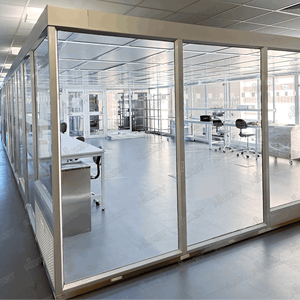
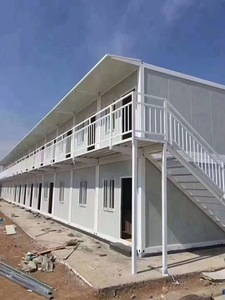
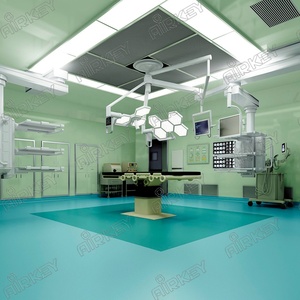
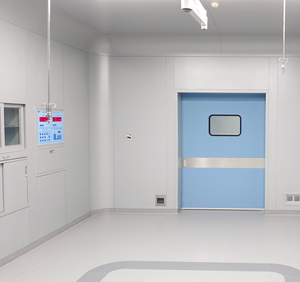
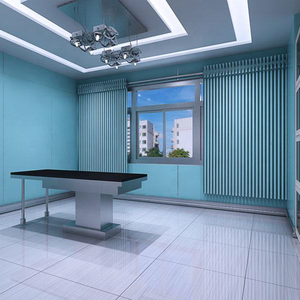
As the Republic of Azerbaijan accelerates its healthcare modernization initiatives—under the direct guidance of the State Agency on Mandatory Health Insurance (İTSV) and the Administration of Regional Medical Divisions (TƏBİB)—the requirement for rapid-deployment, high-precision medical infrastructure has expanded exponentially. Traditional brick-and-mortar hospital construction, constrained by prolonged civil engineering schedules, logistical bottlenecks, and elevated capital expenditures, is increasingly being supplemented by industrialized prefabricated modular healthcare units.
As a leading China wholesale modular healthcare facilities manufacturer and direct exporter serving the South Caucasus region, our engineering matrix delivers turnkey surgical, clinical, and cleanroom environments tailored to Azerbaijan's unique environmental, seismic, and regulatory parameters. This technical whitepaper explores the structural design, bio-containment HVAC engineering, localized logistics routes, and procurement compliance frameworks necessary to execute hospital expansion projects in Baku, Ganja, Sumqayit, and the liberated territories of Karabakh and Eastern Zangezur.
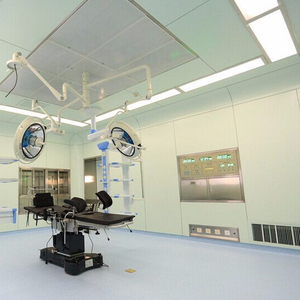
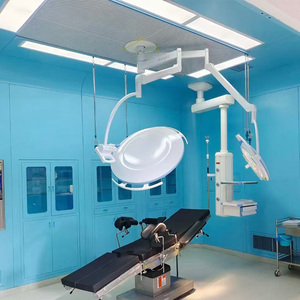
In surgical environments, airborne pathogen control directly correlates with post-operative infection prevention. Our modular operating theaters (MOT) and cleanroom suites utilize a multi-stage air handling unit (AHU) layout combined with vertical ceiling laminar flow diffusers (operating at an airflow velocity of 0.25 m/s to 0.45 m/s).
Strict particle concentration management guaranteeing ISO Class 5 (Class 100) cleanliness over operating tables and ISO Class 7/8 in secondary preparation zones.
Positive pressure cascades (+15 Pa to +25 Pa) prevent ingress of external contaminants in operating rooms, while negative pressure (-10 Pa to -20 Pa) protects staff in isolation wards.
Initial G4 pre-filtration, F9 intermediate filtration, and terminal H14 HEPA filtration capturing 99.995% of micro-particles down to 0.3 microns.
All cleanroom panel joints incorporate flush-mounted coved aluminum profiles, eliminating 90-degree internal corners to prevent dirt accumulation. The interior walls utilize antibacterial High-Pressure Laminate (HPL) or electro-galvanized sheet steel with silver-ion powder coating, resisting aggressive disinfectant chemical cleaning protocols including Hydrogen Peroxide Vapor (HPV) decontamination.
Azerbaijan spans dynamic geographical zones—from the semi-arid, wind-exposed Absheron Peninsula (Baku) to seismic mountain regions in Karabakh and the Greater Caucasus. Structural engineering must account for two localized challenges: high seismic activity and extreme thermal swings compounded by Baku's renowned Khazri (strong northern gale-force winds reaching 140 km/h).
| Structural / Material Parameter | Technical Specification | Azerbaijan Site Compliance Metric |
|---|---|---|
| Primary Structural Steel Framing | Q355B Hot-Dip Galvanized Light-Gauge Steel Frame | Resists MSK-64 Seismic Intensity Grade 8 to 9 |
| Wall Panel Insulation Material | 100mm Polyisocyanurate (PIR) / Rockwool Core | Thermal Conductivity λ ≤ 0.022 W/m·K; Fire Class B-s1, d0 |
| External Wind Pressure Allowance | Designed for 0.75 kN/m² to 1.20 kN/m² dynamic load | Withstands Baku Khazri gale winds without structural deflection |
| Corrosion Protection Rating | C4-M High Marine/Industrial Anti-Corrosion Coating | Resists Caspian Sea saline atmospheric conditions |
| Floor Load Capacity | 350 kg/m² (Ward) to 600 kg/m² (Heavy Equipment/CT Scanner) | Supports heavy digital medical imaging equipment integration |
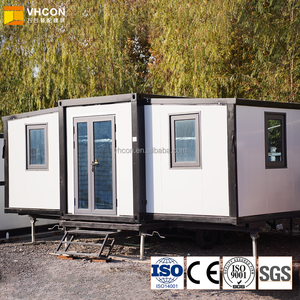
Our prefabricated healthcare container modules, double-deck emergency triage centers, and modular surgery complexes are customized for specific operational deployments in Azerbaijan:
A. Karabakh & Eastern Zangezur Infrastructure Reconstruction: Following national redevelopment plans in cities such as Agdam, Fuzuli, Zangilan, and Shusha, modular medical facilities serve as the primary healthcare backbone. Manufactured off-site in China, shipped in flat-pack or volumetric container units, these clinics can be fully operational within 30 to 45 days of ground foundation preparation, providing emergency trauma care, outpatient services, and clean operating rooms long before conventional construction can be realized.
B. Metro Baku & Urban Center Hospital Extensions: For congested urban health complexes operating under TƏBİB, land footprint availability is restricted. Our two-story modular container clinic structures allow vertical expansion without interrupting existing patient workflows. Modular cleanroom inserts can also be fitted directly inside older hospital buildings, upgrading legacy surgical rooms to modern ISO Class 5 standards within days.
C. Remote Industrial & Energy Sector Clinics (SOCAR & Offshore Operations): Remote oil/gas processing terminals near Sangachal and Caspian offshore installations require self-contained, blast-resistant, negative-pressure isolation triage units. Our heavy-duty container clinics are integrated with independent solar backup power, clean water storage, and integrated sewage treatment units for total autonomous off-grid functionality.
The healthcare infrastructure market in Azerbaijan is experiencing a structural transition towards speed, standardized quality, and modular flexibility. Key market drivers include:
1. Shift Toward Digital Smart Operating Theatres: Modern Azerbaijani surgical teams demand integrated digital environments. Our modular operating rooms feature wall-embedded stainless-steel control touchscreens controlling HVAC temperature/humidity, medical gas pressure alarms, ambient LED dimming, and IP-based telemedicine video feeds connecting Baku specialists with regional surgery suites live.
2. Adoption of the Middle Corridor Logistics Advantage: Logistics between China and Azerbaijan have been significantly optimized via the Trans-Caspian International Transport Route (Middle Corridor). Freight moving from Chinese factories via rail across Central Asia, crossing the Caspian Sea to the Port of Baku (Alat), arrives in 18 to 22 days. This reliable supply chain makes Chinese wholesale modular solutions faster to deliver than European traditional counterparts.
3. Alignment with State Healthcare Directives: By adopting standardized modular units, procurement departments under the Ministry of Health of Azerbaijan achieve predictable budgeting without the cost overruns common to traditional civil projects. Modular buildings also allow future re-location—if clinical needs shift from one region to another, modules can be disassembled, transported, and re-erected with 95% material retention.
As a global modular facility exporter, our manufacturing plants operate under strict ISO 9001 (Quality Management), ISO 14001 (Environmental Management), and ISO 45001 (Occupational Health) standards, alongside international CE certifications for cleanroom components.
Automated laser cutting and robotic welding yield structural tolerances within ±0.5mm, ensuring airtight sealings for cleanrooms.
Every modular cleanroom undergoes pressure decay leak testing, particle count verification, and electrical safety testing before factory exit.
We provide full structural shop drawings, BIM (LOD 400) models, and dispatch engineering teams for on-site commissioning across Azerbaijan.
Contact our engineering consultation team today for custom layout designs, technical compliance sheets, and wholesale B2B quotations for the Azerbaijan market.
Get a Quote