
EN Pay Online
Tailored specifically for the West African tropical environment, our prefabricated steel structures combine structural safety, termite proofing, thermal efficiency, and rapid assembly.
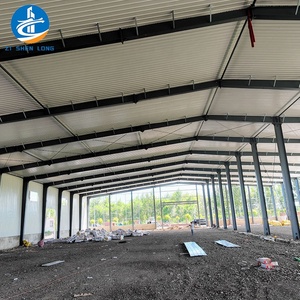
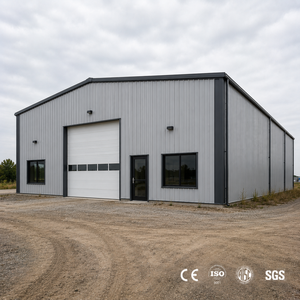
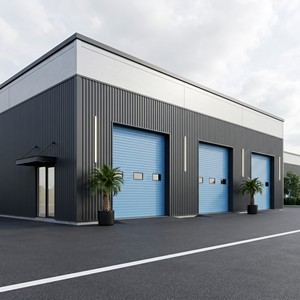
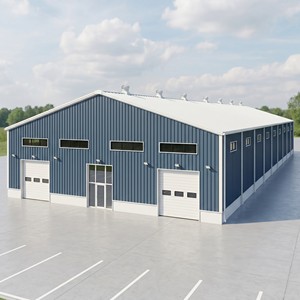
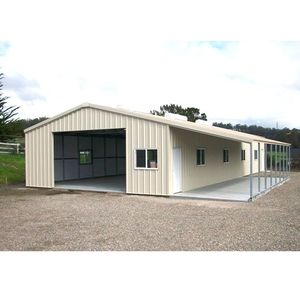
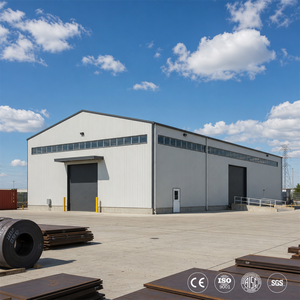
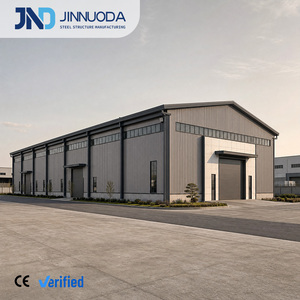
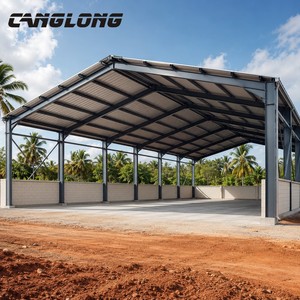
Ghana's built environment is undergoing a structural paradigm shift. Rapid urban expansion across Greater Accra, Kumasi, Takoradi, and Tamale, paired with rising cement costs and supply chain delays for standard masonry construction, has created urgent demand for advanced industrial building technologies. As China’s leading Light Steel Frame Housing Supplier and Exporter servicing West Africa, we engineered structural systems designed specifically to solve the distinct technical challenges of the Ghanaian climate and economy.
Light Gauge Steel (LGS) framing—manufactured from cold-formed high-tensile structural steel (G550 grade)—offers an unmatched strength-to-weight ratio. Unlike conventional concrete blockwork, which suffers from moisture penetration, micro-cracking, and heavy labor overhead, automated CNC roll-formed LGS frames are manufactured to millimeter precision. Every stud, track, and joist is pre-punched, pre-dimpled, and service-routed at our ISO-certified manufacturing facility in China before being shipped directly to Tema Port or Takoradi Port for rapid site installation.
Information Gain Metric: LGS framing reduces total building weight by up to 60% compared to reinforced concrete block masonry, drastically reducing foundation concrete mass required on soft, clay-rich coastal soils in areas like South Tongu or wetland margins in Greater Accra.
Building in West Africa requires strict design considerations for environmental degradation factors. Our light steel framing systems feature hot-dip zinc coating (Z275, providing 275g/m² total zinc weight) or Aluminum-Zinc coating (AZ150). This high level of galvanization prevents atmospheric oxidation and sea salt spray corrosion, securing compliance with ISO 9223 Corrosivity Category C4/C5 environments found along the Atlantic coast of Ghana.
| Performance Standard | Traditional Sand-Crete Blockwork | Our Advanced China LGS Housing System |
|---|---|---|
| Structural Construction Time | 6 to 12 Months (Curing required) | 2 to 4 Weeks (Dry bolt assembly) |
| Termite & Pest Immunity | Moderate (Timber roof frames fail) | 100% Inorganic & Termite Proof |
| Thermal Efficiency (R-Value) | Low (R-0.4 to R-0.8) | High (R-2.8 to R-4.2 with insulated walls) |
| Seismic & Wind Load Rating | Brittle, vulnerable to earth tremors | Ductile, withstands 160km/h winds & seismic shock |
| Material Waste Rate | 15% – 25% On-site wastage | < 1% (Precision CNC cut factory components) |
Our light steel frame structures are custom engineered for the socio-economic and geographical dynamics of various regions in Ghana.
In fast-growing metropolitan centers such as East Legon, Cantonments, Airport Residential Area, and Ahodwo (Kumasi), developers require high-end finish capabilities delivered in record time. Our LGS system integrates seamlessly with fiber-cement board, OSB sheathing, acoustic insulation, and modern decorative facade panels for single-story villas or multi-family duplexes.
Ghana's rich gold and mineral extraction zones around Tarkwa, Obuasi, Prestea, and Ahafo demand durable, comfortable workforce housing camps. Our prefabricated structural steel dormitories, executive staff quarters, field offices, and mess halls are engineered for rapid deployment in remote terrain, resisting heavy tropical rains and high humidity.
To support the Ministry of Works and Housing and members of the Ghana Real Estate Developers Association (GREDA) in bridging Ghana's 1.8 million unit housing deficit, our mass-produced modular LGS housing components offer scalable manufacturing capacity, lowered cost-per-square-meter, and 50+ year structural lifespans.
From cocoa bean storage units in the Ashanti and Western regions to logistics free zones near Tema Port, our clear-span steel buildings provide column-free interior floor plates up to 36 meters wide. Integrated solar-ready roofs and insulated sandwich panels preserve stored crops and temperature-sensitive cargo against severe solar heat radiation.
Several critical economic factors are accelerating the replacement of traditional brick-and-mortar methods with imported Chinese light steel framing technology across West Africa:
Traditional construction in Ghana is subject to volatile price fluctuations in Portland cement, sand aggregates, and imported rebar. Because extended blockwork builds can take 12 to 24 months, real estate projects frequently face unexpected cost overruns. Importing engineered LGS packages from our factory locks in complete structural bill of quantities (BOQ) costs up front, capping financial risk for developers.
Ghana’s warm, tropical climate subjects single-skin concrete block homes to high thermal mass heat absorption. Concrete blocks retain heat during the daytime and radiate it into living spaces throughout the night, driving up air conditioning electrical usage. Our light steel frame wall systems utilize glass-wool or polyurethane thermal break cavity insulation combined with reflective radiant barriers. This keeps indoor ambient temperatures up to 6°C to 8°C cooler, drastically reducing electricity bills for home occupants.
Termites (particularly subterranean species active across West Africa) pose a constant hazard to wooden roof trusses, timber frames, and interior trim in Ghana. Additionally, rising damp damages ground-floor masonry walls. Light gauge steel is completely inorganic: it cannot rot, warp, twist, burn, or support fungal mold growth, making it the most hygienic and durable choice for tropical living.
Answers to common commercial, engineering, and logistical questions from Ghanaian estate developers, contractors, and private builders.
As an industry leader in light steel frame fabrication and modular building export, our factory integrates design, engineering, roll-forming, and international logistics under one continuous quality-controlled workflow: