
EN Pay Online
As the central hub of interoceanic logistics in the Americas, Panama presents a unique environment for industrial construction. The convergence of expansive trade zones—such as the Colón Free Trade Zone (Zona Libre de Colón) and the maritime ecosystems surrounding Balboa and Cristóbal ports—demands construction methodologies that prioritize rapid deployment, structural adaptability, and high environmental resilience. Traditional concrete construction in Panama often encounters severe delays attributable to prolonged tropical rainy seasons (lasting up to nine months annually), logistical bottlenecks in remote terrain, and escalating material costs.
As China’s premier modular container buildings factory and global exporter, our engineering division manufactures advanced off-site modular buildings designed specifically to withstand Panama's hyper-humid climate and coastal salt-spray exposure. By integrating structural steel framing (Q235B/Q355B galvanized profiles) with hydrophobic polyurethane (PU) or high-density Rockwool core sandwich panels, our prefabricated units provide zero-delay structural integrity for major infrastructure operations, commercial expansions, and remote resource sector camps across the Panamanian Isthmus.
Specifically engineered to resist relative humidity exceeding 90%, preventing thermal bridging, interior condensation, and structural oxidation.
Rigid cold-formed steel frames engineered to endure seismic accelerations and tropical storm gusts up to 250 km/h (Category 4 typhoon/hurricane rating).
Optimized containerized dimensions (Flat-Pack and Knock-Down systems) ensuring ultra-low ocean freight rates directly to Panama’s major ports.
For project managers, procurement directors, and civil engineering firms in Panama, selecting the appropriate structural material dictates project ROI. Below is an engineering comparison detailing why steel-framed modular container units consistently outperform conventional masonry in coastal and tropical regions.
| Evaluation Parameter | Modular Container Structures (China Factory Direct) | Traditional Reinforced Concrete (Panama On-Site) |
|---|---|---|
| Construction Speed | 70% Faster (Off-site fabrication concurrent with site foundation prep) | Slow (Subject to weather delays, wet curing cycles, and labor shortages) |
| Corrosion Resistance | Hot-Dip Galvanized Frame + Fluorocarbon / C5-I Coastal Epoxy Coating | Rebar expansion and spalling caused by atmospheric chloride ingress |
| Thermal Insulation Coefficient (U-Value) | U ≤ 0.22 W/m²K (Polyurethane Core / High Insulation Rockwool) | U ≥ 1.80 W/m²K (Standard concrete block absorbs and retains solar heat) |
| Environmental Footprint | 95% Recyclable Steel; Zero wet trade waste on site; Low energy assembly | High carbon emissions; High site water consumption; Heavy debris generation |
| Relocability & Scalability | 100% Demountable, Stackable (up to 3 stories), easily transportable by flatbed | Fixed permanent asset; Demolition required for land repurposing |
Our modular container buildings and prefabricated steel workshops are custom-tailored to solve operational challenges across Panama’s diverse economic landscapes:
In high-density industrial hubs like Manzanillo International Terminal (MIT), Colón Container Terminal (CCT), and Puerto de Balboa, ground footprint availability fluctuates rapidly. Our flat-pack modular container office units serve as administrative headquarters, customs clearance centers, and dispatch hubs. They can be stacked up to three levels with exterior steel staircases and panoramic glass curtain walls, providing immediate operational ready-spaces with minimal disruption to ongoing container handling operations.
Operations located in rugged, high-rainfall regions such as Donoso (Colón Province) require self-sustaining, heavy-duty worker camps. We export complete turnkey modular dormitories, commercial kitchen containers, dining halls, water purification shelters, and site medical clinics. Each module features moisture-sealed vinyl flooring, integrated electrical wiring adhering to NEC standards, and localized HVAC cutouts designed for continuous tropical climate control.
Panama’s booming eco-hospitality sector requires low-impact building solutions. Moving heavy construction raw materials to coastal islands like Bocas del Toro, Pearl Islands, or Coiba is cost-prohibitive. Our customized luxury container homes and modular steel villas are pre-fitted with timber-textured WPC cladding, floor-to-ceiling insulated glass doors, and off-grid solar roof mounts, enabling zero-footprint resort developments in environmentally sensitive preserves.
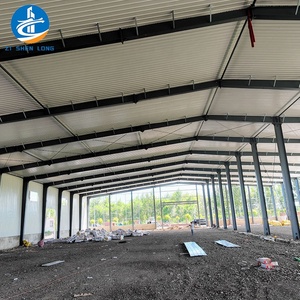
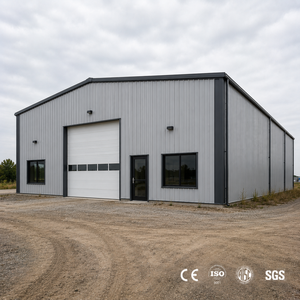
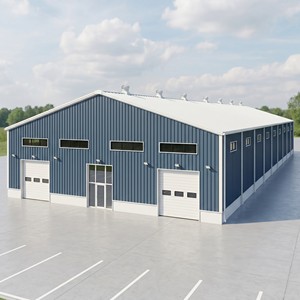
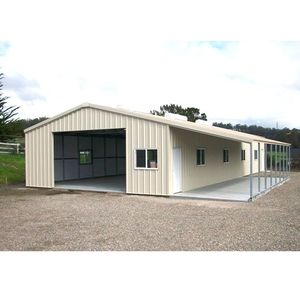
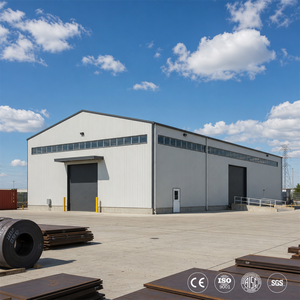
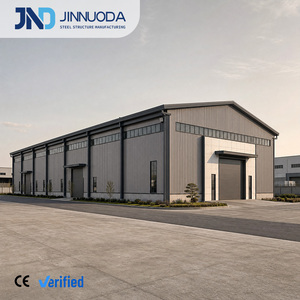
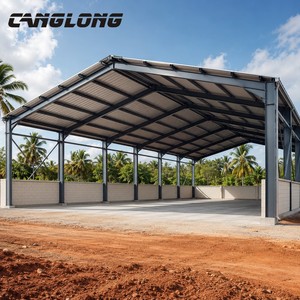
For large-span industrial needs in the Panamá Pacífico Special Economic Area, our clear-span steel frame warehouse kits (utilizing quick-bolt connections) offer storage solutions spanning up to 36 meters without internal columns. These buildings easily integrate overhead crane beams, insulated gable roofing, and automated roll-up doors, making them the preferred choice for freight forwarders and distribution centers.
The Panamanian construction sector is undergoing a structural transition toward industrialized prefabrication (Off-Site Construction), governed by three primary economic and environmental drivers:
Panama's National Sustainable Construction Policy emphasizes energy efficiency. Our thermal-break modular panel designs significantly reduce HVAC power loads, lowering long-term carbon output for corporate operators.
Off-site modular fabrication transfers up to 85% of construction activities to our controlled factory environment in China, drastically cutting site labor costs and weather-related downtime in Panama.
Modular buildings allow multinational contractors operating in Panama to classify structures as movable equipment assets, offering advantageous tax depreciation schedules and re-deployability across future regional contracts.
With over 15 years of dedicated manufacturing experience, our state-of-the-art production facility covers over 50,000 square meters of automated production lines, including CNC cold-roll forming mills, laser-cutting stations, shot-blasting rust removal chambers, and automated powder coating systems.
We maintain strict compliance with global quality management systems, including ISO 9001, ISO 14001, and EN1090 structural steel certification. When exporting to Panama, we manage every phase of engineering design, structural calculations (conforming to REP - Reglamento Estructural de Panamá), international sea freight logistics, customs documentation, and full post-delivery installation oversight.
Our structural frames undergo hot-dip galvanization with a minimum zinc coating weight of 180g/m², followed by an epoxy zinc-rich primer and C5-I grade anti-corrosion topcoat. Roof panel seams utilize continuous standing-seam connections with high-grade butyl rubber sealant, eliminating water ingress during heavy tropical downpours.
Factory production typically takes 15 to 25 days depending on project scale. Ocean transit from main Chinese shipping ports (Ningbo, Shanghai, Qingdao) directly to Puerto Balboa or Manzanillo International Terminal (MIT) takes approximately 24 to 30 days via direct liner services.
Yes. Our structural engineering department provides full 3D BIM models and structural stress calculations designed to comply with the Reglamento Estructural de Panamá (REP) and international building codes (IBC 2021). Electrical systems can be pre-wired to meet 110V/220V 60Hz specs adhering to NEC standards.
Utilizing our optimized Flat-Pack demountable system, up to 4 standard 20ft container modules (complete with roof, floor, corner posts, and wall panels) can be bundled together as SOC (Shipper Owned Container) units or loaded inside a single 40ft HC shipping container, dramatically reducing ocean freight costs per square meter.
Modular containers require minimal civil foundation work compared to concrete buildings. Simple concrete pier blocks at the module corner posts, a continuous perimeter concrete strip foundation, or a simple reinforced concrete slab is sufficient. This significantly mitigates site disturbance in Panama's clay or coastal soil environments.
Absolutely. Every module is manufactured with integrated ISO standard corner castings. They can be unbolted, disconnected from local utility hookups, and lifted onto standard flatbed trucks for transportation to a new project site anywhere across Panama or neighboring Central American countries.
Contact our international engineering team today for immediate technical consultations, architectural layout drawings, and transparent FOB/CIF Panama freight estimates.
Get a Quote