
Strategic Context: Prefabricated Accommodation Demand in Japan's Evolving Construction Landscape
The Japanese construction and industrial sector is undergoing a profound structural transition. Driven by the enforcement of the strict 2024 Worktime Regulation Reforms (働き方改革 - Hatarakikata Kaikaku), major Japanese EPC contractors, infrastructure developers, and general contractors (ゼネコン - Zenekon) are urgently seeking ways to optimize project timelines, enhance worker welfare standards, and control rising on-site labor overheads. Modern prefabricated site accommodation—ranging from stackable container dormitories to high-insulation modular field offices—has emerged as the primary operational lever for project managers operating across Honshu, Hokkaido, Kyushu, and Okinawa.
Procuring prefabricated buildings for the Japanese domestic market requires navigating stringent performance criteria. Japan's geographic positioning subjects temporary structures to intense environmental stressors, including high-intensity seismic events (up to Shindo 7 intensity), seasonal typhoon winds exceeding 60 m/s, heavy snow accumulation (especially in Northern Tohoku and Hokkaido), and humidity-driven corrosion in coastal port expansions. Consequently, standard global container solutions often fail to satisfy Japanese regulatory expectations unless manufactured under certified international quality benchmarks such as CE Marking (EN 1090-1 structural steel execution classes) and ISO 9001/14001 manufacturing standardizations.
Key Information Gain for Japanese B2B Buyers
Unlike conventional local Japanese rental units (仮設ハウス) that suffer from poor thermal barrier performance and restricted height, international CE-certified modular prefabricated systems utilize cold-formed high-tensile galvanized steel frames integrated with Polyisocyanurate (PIR) or Rockwool core sandwich panels. This delivers up to 40% higher thermal retention (U-values as low as 0.22 W/m²K), facilitating compliance with Japan's Net-Zero Energy Building (ZEB-Ready) temporary shelter guidelines.
Structural Engineering & Material Standards: CE Certification Meets Japanese Requirements
To establish long-term structural reliability in Japan, prefabricated site accommodations must be designed with strict structural steel load calculations. Nexa Prefab's global manufacturing engineering team integrates European CE standards with Japanese Industrial Standards (JIS) to deliver dual-compliant modular structures.
| Engineering Vector | Standard International Spec | CE Certified Nexa Prefab Spec | Japanese Market Adaptation (JIS / Kenchiku Kijun-ho) |
|---|---|---|---|
| Structural Steel Frame | Q235 Mild Steel | High-Tensile S355JR / EN 1090-2 (Class EC3) | Equivalent to JIS G3101 SS400 with 275g/m² Hot-Dip Galvanization |
| Seismic Performance | Zone 1 - 2 basic resistance | Eurocode 8 Seismic Resistance Class 3 | Designed for Seismic Coefficient Z=1.0 (Earthquake Proofing) |
| Insulation Core | 40mm EPS Foam | 50mm - 100mm PIR / Rockwool (Class A1 Fire) | JIS A 9511 Compliant; Thermal Conductivity ≤ 0.020 W/m·K |
| Wind Load Resistance | Up to 110 km/h | Up to 180 km/h (Typhoon Grade) | Anchorage designed for Japanese coastal wind speed pressures (60 m/s) |
| Snow Load Rating | 0.5 kN/m² | Up to 2.5 kN/m² Reinforced Roof Structure | Suitable for Hokkaido heavy snow accumulation zones (up to 200cm depth) |
| Electrical Setup | Single Voltage 220V 50Hz | Modular Circuit Box with Dual CE/UL Wiring | Adapted for 100V / 200V Dual Frequency (50Hz Eastern / 60Hz Western Japan) |
Primary Application Scenarios in the Japanese Market
The versatility of CE-certified modular prefabricated site accommodation enables efficient deployment across a diverse range of high-priority Japanese industrial sectors:
Semiconductor Mega-Fab Construction Camps
Rapid deployment of multi-storey worker accommodation dormitories, cafeteria halls, and administrative offices for mega-scale industrial sites in Kumamoto, Chitose, and Mie prefectures.
Disaster Preparedness & Emergency Recovery
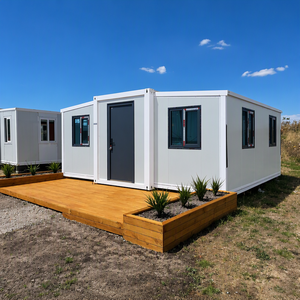
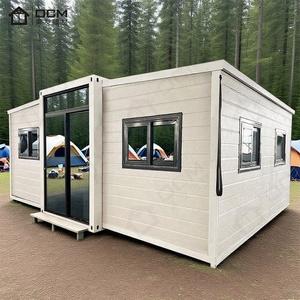
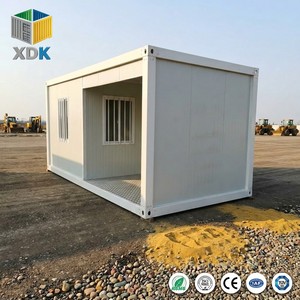
Foldable Z-type cabins and flat-pack container units optimized for immediate airlift or flatbed transport to earthquake-affected zones (such as Noto Peninsula) for emergency relief shelters.
Renewable Energy & Off-Grid Site Infrastructure
Weather-sealed modular command centers and staff living quarters for offshore wind farm staging sites, solar parks in Tohoku, and geothermal energy plants in Kyushu.
Major Linear & Transportation Projects
Relocatable temporary site offices, guard rooms, and rest facilities supporting long-term projects such as the Chuo Shinkansen Maglev line and expressway bridge upgrades.
Resort Infrastructure & Modular Hospitality
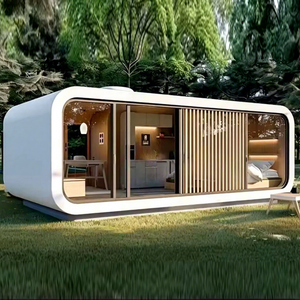
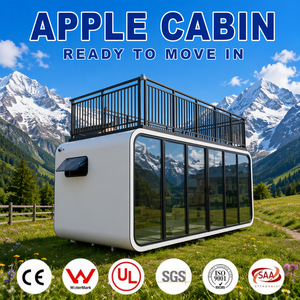
Eco-friendly Apple Cabin pods and modern space cabins used as worker housing or guest pods in alpine snow zones like Niseko, Hakuba, and Nagano.
Port & Maritime Logistics Base Offices
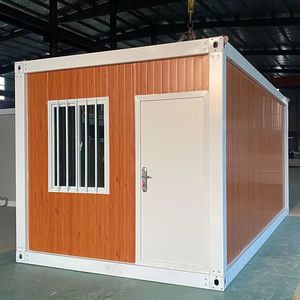
Anti-corrosive marine-grade painted container units designed for long-term placement at primary Japanese international logistics ports like Yokohama, Kobe, and Nagoya.
Localization Trends in Japan: ESG, ZEB-Ready, and Workforce Accommodation Standards
The Japanese procurement landscape is increasingly driven by Environmental, Social, and Governance (ESG) mandates. Leading Japanese construction entities are no longer willing to settle for primitive temporary shelters. The focus has shifted to three critical localized trends:
- Net-Zero Energy Building (ZEB) Ready Construction: Prefabricated modules must incorporate high-density non-combustible insulation, LED energy management systems, and pre-engineered roof loads capable of mounting solar PV panel arrays.
- Enhanced Acoustic and Thermal Comfort for Labor Retention: Given Japan's aging labor force and growing inclusion of foreign technical interns (技能実習生 / 特定技能), site dormitories must provide sound insulation (STC rating ≥ 45dB) and efficient HVAC climate control to guarantee adequate rest and reduce site accidents.
- Circular Economy and Modular Reusability: Site units are expected to undergo multiple deployment cycles across different prefectures. Cold-formed steel frames with high-durability zinc coatings ensure a structural service life exceeding 20 years with minimal maintenance.
Nexa Prefab Corporate Superiority: Integrated Manufacturing & Direct Supply to Japan
As a world-class prefabricated building manufacturer operating from advanced production facilities in Gebze / Kocaeli, Turkey, Nexa Prefab bridges the gap between high-end European engineering precision and competitive factory-direct pricing. With export operations reaching over 60 countries, Nexa Prefab has established a dedicated supply chain matrix tailored specifically for Japanese corporate clients and EPC contractors.
Why Japanese Buyers Partner with Nexa Prefab
Our vertically integrated manufacturing facility combines automated CAD/CAM roll-forming lines with rigorous quality management to deliver fully customized, CE-marked modular solutions directly to Japanese ports.
- ISO 9001 / 14001 / CE Certified Manufacturing: Complete traceability of raw materials and structural welding integrity.
- Engineered for Japanese Site Logistics: Optimized flat-pack dimensions fit standardized 40ft High Cube containers or SOC shipping, minimizing ocean freight costs to Tokyo, Yokohama, Kobe, and Osaka.
- Bespoke Customization & Electrical Localization: Pre-wired electrical circuits, Japanese outlet configurations (Type A/B), and pre-plumbed sanitary connections.
- Rapid Production Capacity: Capable of outputting over 1,500 container units monthly to fulfill large-scale worker camp requirements on tight delivery schedules.
Start Your Project Consultation
Speak with our dedicated engineering specialists regarding your project specifications in Japan.
Inquire NowFrequently Asked Questions (FAQ) for Japanese Site Procurement Managers
Q1: Do Nexa Prefab container houses comply with Japanese Building Standards Law (建築基準法)?
Yes. Our engineering team provides detailed structural calculation sheets (構造計算書) covering dead load, live load, wind pressure, and seismic force coefficients (Z=1.0). When properly anchored to approved foundation piers, our CE-certified steel frames fulfill Japanese temporary building permit standards.
Q2: How are electrical systems customized for Japanese 100V / 200V requirements?
All factory-installed electrical wiring, distribution boxes, circuit breakers, and switches can be pre-configured to meet Japanese PSE standards and operating frequencies (50Hz for Eastern Japan including Tokyo, 60Hz for Western Japan including Osaka/Nagoya).
Q3: Can these prefabricated structures withstand Hokkaido's extreme winter snow loads?
Absolutely. For heavy snow zones, we reinforce the roof truss system with thicker cold-formed steel purlins and increase roof pitch options, allowing for snow load ratings up to 2.5 kN/m² (equivalent to 1.5 - 2 meters of fresh snow accumulation).
Q4: What is the typical shipping lead time from your factory to major ports in Japan?
Once manufacturing is complete, ocean shipping from Turkey (Ambarli / Izmit ports) to main Japanese base ports (Yokohama, Tokyo, Kobe, Osaka, Hakata) typically takes between 28 to 35 days via direct maritime container freight lines.
Q5: How many workers are required to assemble a standard 20ft Flat-Pack accommodation unit on-site?
A team of 3 to 4 skilled site workers equipped with a standard crane or forklift can fully assemble and weather-seal a 20ft flat-pack unit within 2 to 3 hours, drastically cutting down field labor costs.
Q6: Are custom layouts and multi-storey stackable options available?
Yes, our modular container systems can be stacked up to 3 storeys high without additional structural external scaffolding. Floor plans can be customized for open-plan offices, dormitory rooms, executive suites, dining halls, or sanitary blocks.