
EN Pay Online
In the modern globalized economy, cold chain logistics forms the bedrock of food security, pharmaceutical preservation, biopharmaceutical distribution, and agricultural export resilience. As global compliance demands around temperature-sensitive product integrity tighten, commercial and industrial enterprises are transitioning away from slow, energy-inefficient traditional masonry construction toward pre-engineered modular cold room facilities.
China has emerged as the global epicenter for advanced modular cold room manufacturing. Combining high-precision automated continuous polyurethane (PU) / polyisocyanurate (PIR) sandwich panel laminations, structural steel fabrication, and smart IoT-enabled HVAC/R integration, leading Chinese OEMs deliver turnkey thermal facilities with unparalleled cost efficiency, rapid deployment capability, and strict environmental compliance.
Key Engineering Gain: Modern modular cold storage facilities reduce total thermal bridging by up to 98% compared to legacy modular builds. By integrating high-density PIR cores (≥42 kg/m³) with eccentric cam-lock interlocking mechanisms, operating energy consumption drops by 25% to 35% annually.
Whether deploying blast freezers operating at -40°C for ocean fisheries, controlled atmosphere (CA) rooms for extended fruit storage, or ultra-clean pharmaceutical cold suites operating under strict GMP conditions, selecting the right modular factory and supply chain partner dictates operational ROI over a 25+ year facility lifecycle.
Explore our flagship modular cold room buildings, prefabricated steel warehouse structures, and rapid-assembly cold chain solutions engineered for international deployment.
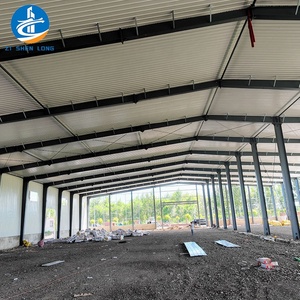
Heavy-duty pre-engineered steel structure warehouse featuring integrated PIR thermal insulation panels, engineered for large-scale agricultural and logistics hubs.
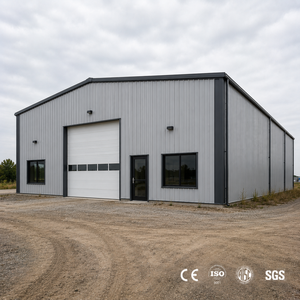
Clear-span structural steel building customized for automated high-bay racking systems and rapid site assembly with high-torque bolt assemblies.
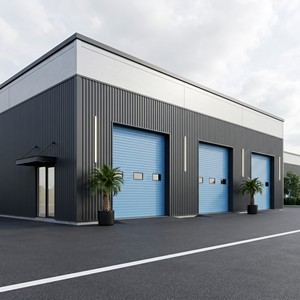
Multi-temperature zone warehouse designed for pharmaceutical and frozen food logistics, equipped with dock seals and air curtain integration.
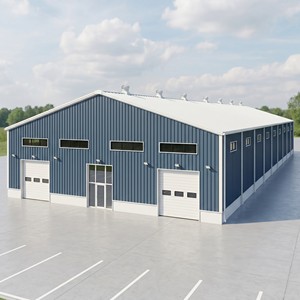
HACCP-compliant modular facility built specifically for meat, seafood, and food processing lines with food-grade stainless steel interior wall cladding.
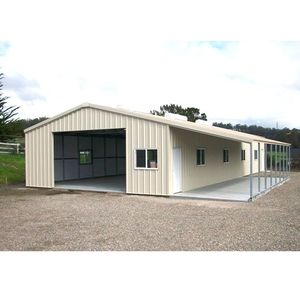
Economical prefab modular kit tailored for agricultural post-harvest pre-cooling, supermarket distribution points, and decentralized cold hubs.
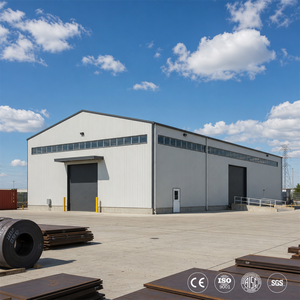
Complete architectural package incorporating structural frame, high-efficiency refrigeration units, insulated ceiling suspension, and electric sliding cold doors.
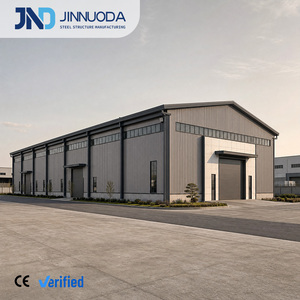
Designed for heavy industrial applications requiring continuous crane loading, high floor load capacities, and multi-stage refrigeration compressors.
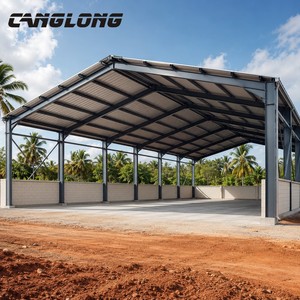
Modular cold building system ideal for remote locations, seismic zones, and quick deployment disaster response food preservation operations.
High-performance thermal enclosure systems require meticulous integration of core material chemistry, mechanical locking precision, and thermal bridge mitigation.
Utilizing high-index Polyisocyanurate (PIR) foam cores boasting thermal conductivity as low as 0.021 W/m·K. Provides self-extinguishing flame resistance compliant with international EN 13501-1 and ASTM E84 safety standards.
Pre-engineered steel cam-locks embedded into panel margins during high-pressure foaming. Allows seamless male-female tongue and groove interlocking that ensures air-tight seals without thermal bridging.
Integration with eco-friendly Bitzer, Copeland, or Danfoss multi-stage rack compressor systems. Uses low-GWP refrigerants (R448A/R449A/CO2) with variable speed drives for maximum part-load energy efficiency.
The global cold room facilities market is undergoing a seismic shift driven by industrial automation, stringent decarbonization mandates, and the explosive growth of online fresh grocery and pharmaceutical logistics. Procurement teams evaluating Chinese modular cold storage factories must realign their specifications with five major macro trends:
Next-generation modular facilities are no longer passive insulated boxes. Modern Chinese suppliers integrate digital-twin ready IoT sensor arrays directly into panel substrates and refrigeration circuits. These real-time networks monitor moisture ingress, micro-settlement, differential pressure, and thermal degradation, alerting facility engineers prior to thermal breakdown.
With global enforcement of the Kigali Amendment and EU F-Gas regulations, high-GWP synthetic refrigerants are being phased out. Leading factories in China are designing modular units pre-configured for transcritical CO2 (R744) or low-charge Ammonia (R717) systems, drastically reducing greenhouse carbon footprints while maintaining ultra-low temperature performance down to -60°C.
Industrial cold storage is inherently energy-intensive. Modern modular cold warehouses feature reinforced roof trusses pre-engineered to support high-density photovoltaic (PV) solar panel arrays. Paired with battery energy storage systems (BESS), solar-assisted modular cold rooms reduce grid dependency by up to 60% during peak daytime cooling loads.
| Feature / Parameter | Traditional Cold Rooms | Next-Gen Chinese Modular Cold Facilities |
|---|---|---|
| On-Site Construction Time | 6 to 12 Months | 2 to 6 Weeks (Pre-Engineered) |
| Thermal Bridge Risk | High (Mortar / Poor Seal Joints) | Near Zero (Precision Cam-Lock + PIR Gaskets) |
| Insulation Thermal Conductivity | 0.035 - 0.045 W/m·K (EPS/Fiberglass) | ≤ 0.021 W/m·K (High-Index PIR Foam) |
| Relocation & Expansion | Demolition Required (Permanent) | 100% Modular (Dismountable & Expandable) |
| Life Cycle Energy Cost | High Baseline | 30% Lower Energy Consumption |
Cross-border procurement directors are increasingly bypassing trading companies to establish direct relationship contracts with verified Chinese factories. Direct OEM manufacturing yields custom structural engineering, factory acceptance testing (FAT), and access to wholesale pricing structures that cut capital expenditure (CapEx) by 20% to 35%.
We combine decades of structural engineering mastery with state-of-the-art continuous automated production lines to deliver turnkey cold chain facilities globally.
Italian Hennecke continuous foaming production lines ensure uniform density (≥42kg/m³) and zero void space across all PIR/PU panel cores.
Every facility is backed by rigorous quality control protocols certified under ISO 9001, ISO 14001, CE, and FM Global fire safety guidelines.
Flat-pack optimized engineering allows maximum container loading efficiency (40ft HQ), minimizing ocean freight costs for international clients.
From initial 3D BIM modeling and structural load calculations to overseas installation guidance and commissioning support.
Detailed answers to critical technical, financial, and logistical questions encountered during cold room facility sourcing.
Connect with our senior cold chain structural engineers for complete custom design layouts, thermal load calculations, and competitive OEM factory quotes.