
EN Pay Online
Explore our ISO-certified structural insulated metal panels engineered for cold storage, cleanroom environments, commercial roofs, and high-performance exterior walls.
 Wall / Structural
 Cleanroom ISO 14644
 Wall & Roof
 Cold Chain
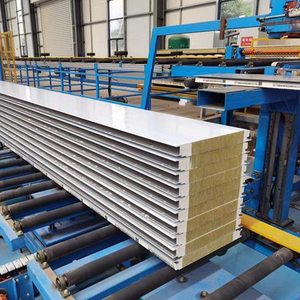 Acoustic & Fireproof
 Class A Fireproof
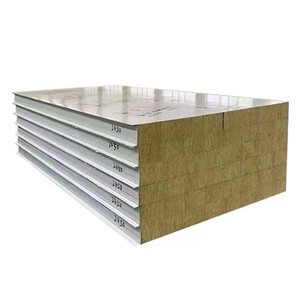 High Density Mineral
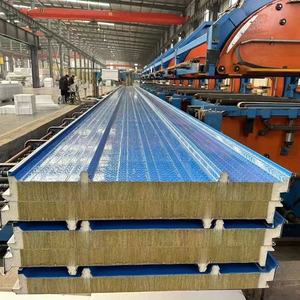 Industrial Roof
Modern industrial prefabrication relies heavily on composite structural enclosures. An Insulated Sandwich Panel functions as a composite structural element where two high-tensile metallic facings (typically pre-painted galvanized steel - PPGI, or aluminum) are shear-bonded to a lightweight, highly insulating core core matrix. This stress-skin sandwich configuration achieves an exceptionally high strength-to-weight ratio, optimizing bending stiffness and flexural resistance while minimizing overall dead load on primary structural steel frameworks.
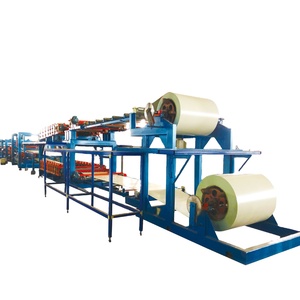
As China's premier manufacturer and global exporter of prefabricated building materials, our manufacturing facilities integrate continuous double-belt foaming lines and automated mineral wool slitting systems. By combining mechanical precision with advanced polymer chemistry, our panel systems effectively resolve critical thermal bridging challenges, lower operational energy consumption in cold chain logistics, and fulfill strict building envelope requirements under global engineering codes (such as EN 14509, ASTM C1363, and FM Global standards).
The mechanical performance of a sandwich panel is dictated by the composite shear transfer across the core-to-facing adhesive bond. Under wind uplift or snow load vectors, the exterior metal facings absorb axial tensile and compressive stresses, while the rigid core material (Polyisocyanurate PIR, Polyurethane PUR, Mineral Rock Wool, or Expanded Polystyrene EPS) resists shear stresses and maintains critical structural spacing between facings to prevent local buckling.
Closed-cell pentane-blown foam structures trap low-conductivity blowing agents, delivering thermal performance as high as R-7.5 per inch for superior energy preservation.
Enables exterior wall panels to act as structural shear diaphragms, resisting lateral wind loads up to 3.0 kPa without secondary horizontal girt support.
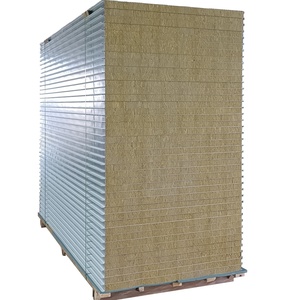
Non-combustible basalt Rock Wool cores provide up to 4-hour structural integrity (EI 240), preventing flame propagation and maintaining zero toxic smoke emissions.
Selecting the optimal core matrix requires balancing thermal efficiency, fire safety compliance, sound transmission class (STC), and overall material cost. Below is a comprehensive engineering comparison based on rigorous third-party lab testing (ISO 8301 / ASTM C518):
| Performance Parameter | PIR (Polyisocyanurate) | PUR (Polyurethane) | Rock Wool (Basalt) | EPS (Expanded Polystyrene) |
|---|---|---|---|---|
| Thermal Conductivity ($\lambda$) | 0.019 - 0.022 W/m·K | 0.023 - 0.026 W/m·K | 0.038 - 0.044 W/m·K | 0.033 - 0.038 W/m·K |
| Fire Reaction (EN 13501-1) | B-s1, d0 (Flame Retardant) | B2 / B3 Standard | A1 / A2-s1, d0 (Non-Combustible) | B1 / B2 Standard |
| Core Density ($\text{kg/m}^3$) | 38 - 45 kg/m³ | 35 - 40 kg/m³ | 100 - 140 kg/m³ | 15 - 25 kg/m³ |
| Closed Cell Ratio | > 95% | > 90% | N/A (Fibrous Matrix) | Closed Cell Structure |
| Operating Temp Range | -180°C to +140°C | -120°C to +110°C | -50°C to +700°C | -50°C to +75°C |
| Acoustic Damping (STC) | 24 - 27 dB | 23 - 26 dB | 31 - 35 dB | 21 - 24 dB |
| Primary Application Area | Cold Storage, Cleanrooms, High-End Commercial | Standard Freezers, Industrial Roofs | High-Risk Warehouses, Fire Walls | Cost-Sensitive Prefab / Temp Housing |
As global construction sectors accelerate toward Net-Zero carbon emissions and energy-efficient building envelopes, the international procurement landscape for insulated metal panels (IMPs) is undergoing structural shifts. Buyers from North America, Europe, the Middle East, and Southeast Asia are increasingly prioritizing engineered performance over simple unit price.
Governments worldwide are implementing stricter thermal insulation codes (such as EU Energy Performance of Buildings Directive - EPBD and ASHRAE 90.1). Traditional mechanical fasteners that pierce through panel faces create major thermal bridges. Procurement is shifting toward Concealed Fastener Joints (Z-Lock & Double Tongue-and-Groove System). These joint profiles conceal mechanical screws within the interlock, protecting fasteners from atmospheric weathering while eliminating thermal transfer paths.
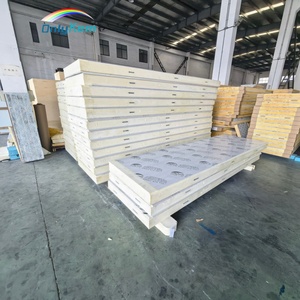
The rapid expansion of global biopharmaceuticals, fresh food e-commerce, and centralized logistics hubs has driven unprecedented demand for thick PIR and PU cold storage panels (150mm to 200mm thickness). Key procurement metrics now focus heavily on Cam-Lock tight integration, tight joint sealants, and low vapor permeability to prevent interior frost build-up and reduce refrigeration compressor loads.
With semiconductor gigafactories and pharmaceutical facilities expanding globally, sandwich panels engineered specifically for cleanrooms are vital. Key innovations include specialized anti-static, anti-bacterial pre-coated metal facings (such as PVDF or specialized HDP coatings) that resist harsh chemical sterilization without off-gassing microparticles.
Environmental, Social, and Governance (ESG) mandates are driving panel manufacturers to replace fossil-based raw materials with bio-based polyols derived from agricultural waste or recycled PET polymers. Additionally, 100% recyclable mineral wool cores harvested from natural basalt rocks are leading the green building revolution.
Leading Chinese exporters are transitioning from labor-intensive batch production to hyper-automated Industry 4.0 production environments. Advanced engineering technologies currently deployed on our continuous double-belt production lines include:
Integrating ultra-thin Vacuum Insulation Panels (VIPs) within PIR cores to achieve an unprecedented thermal conductivity rating below 0.012 W/m·K for space-critical applications.
Replacing traditional zinc coatings with ZAM alloy steel facings, offering up to 5x greater corrosion resistance in coastal, salt-spray, and agricultural environments.
Real-time continuous laser inspection ensures sub-millimeter tolerances on tongue-and-groove joint geometry, eliminating installation gaps on-site.
As a global B2B supplier, structural safety and reliability are our highest priorities. Our manufacturing footprint incorporates advanced Italian-designed continuous foaming machinery and multi-stage automated handling systems capable of producing panel lengths up to 18 meters.
Every batch of raw materials—from steel coils to chemical polyols and basalt mineral fibers—undergoes incoming quality control (IQC). Finished panels undergo rigorous lab testing for tension, shear strength, fire resistance, and aging performance:
Shipping large-format structural panels overseas requires specialized packaging engineering. Panels are shrink-wrapped in protective film, bundled with high-density EPS corner protectors, and loaded into 40ft HQ shipping containers using specialized automated pallet pushers. This packaging strategy prevents edge damage, moisture ingress, and surface scratching during maritime transport.
Connect with our structural engineering team to get custom layout CAD shop drawings, sample kits, and factory-direct B2B quotes for your project.